Quick Answer
Fall is the best window to get a Colorado roof ready for winter. Before the first hard freeze, clean your gutters and downspouts, clear off debris, trim overhanging branches, and inspect the shingles, flashing, and vents — including anything left over from summer hail. Catching a loose shingle or a small leak in September is a cheap fix; finding it after snow and ice have driven water into the roof deck is not. If you are not comfortable getting on the roof, a free professional inspection covers the whole checklist safely.
For Colorado homeowners, fall is quietly the most important season for your roof. Spring and summer bring the hail and wind that do the damage; winter brings the snow, ice, and freeze-thaw cycles that exploit it. The few weeks in between — roughly September through early November on the Front Range — are your best chance to find and fix small problems before the cold turns them into expensive ones.
This checklist walks through what to look at, what to clean, and what to leave to a professional. None of it is complicated, but doing it now, before the first hard freeze in the Denver metro, is what separates a $200 repair from a soaked attic in January.
Why Fall Roof Maintenance Matters More in Colorado
Colorado roofs take a beating that roofs in milder climates never see. A single summer can deliver multiple hailstorms, then the temperature swings 40 degrees between a sunny afternoon and a freezing night. That freeze-thaw cycle is brutal on roofing: water works its way into a hairline crack, freezes, expands, and pries the gap wider — over and over, all winter long.
Add heavy snow load and the ice dams that form when attic heat melts snow unevenly, and a minor flaw you could have caught in October becomes a leak that shows up as a stain on your ceiling in February. Fall maintenance is really just closing those doors before winter comes looking for them.
Your Fall Roof Maintenance Checklist
Here is the full list at a glance. The sections below explain the ones that matter most and where a mistake tends to cost the most.
- Clean gutters and downspouts and confirm water flows freely away from the house
- Clear leaves, branches, and debris off the roof surface and out of the valleys
- Trim tree limbs that overhang or touch the roof
- Inspect shingles for cracks, curling, lifting, or bald spots where granules are gone
- Check the flashing around chimneys, skylights, and vents for gaps or rust
- Look at the rubber boots and seals around plumbing vents for cracks
- Inspect the attic for daylight, damp insulation, or a musty smell
- Confirm attic insulation and ventilation are in good shape to prevent ice dams
- Address any leftover hail damage from the summer storm season
Clean Your Gutters and Downspouts
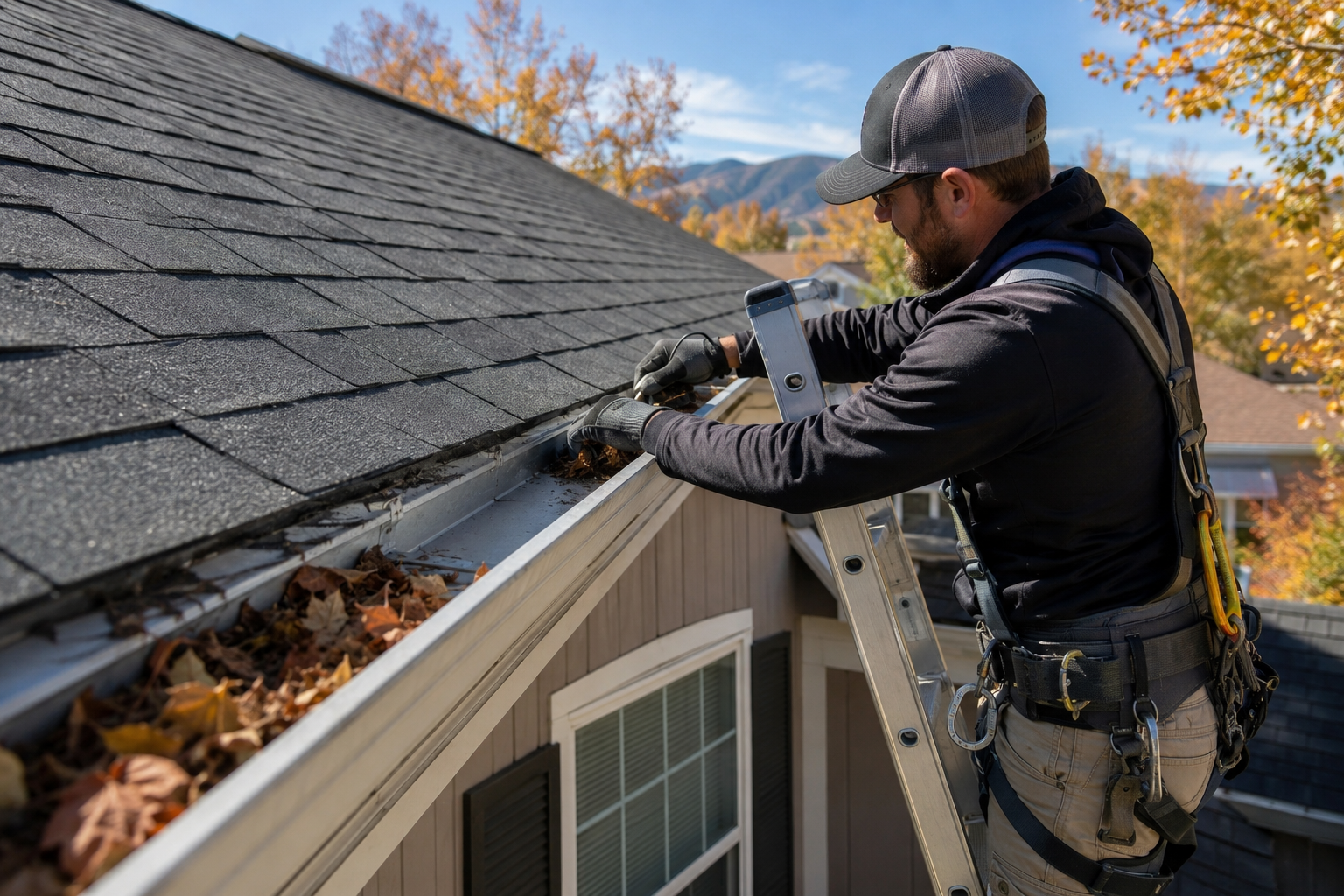
This is the single most valuable thing you can do in the fall. When gutters clog with leaves and shingle grit, melting snow has nowhere to go. It backs up under the shingles at the eaves, refreezes, and forms ice dams that force water up and under the roof edge and into your home.
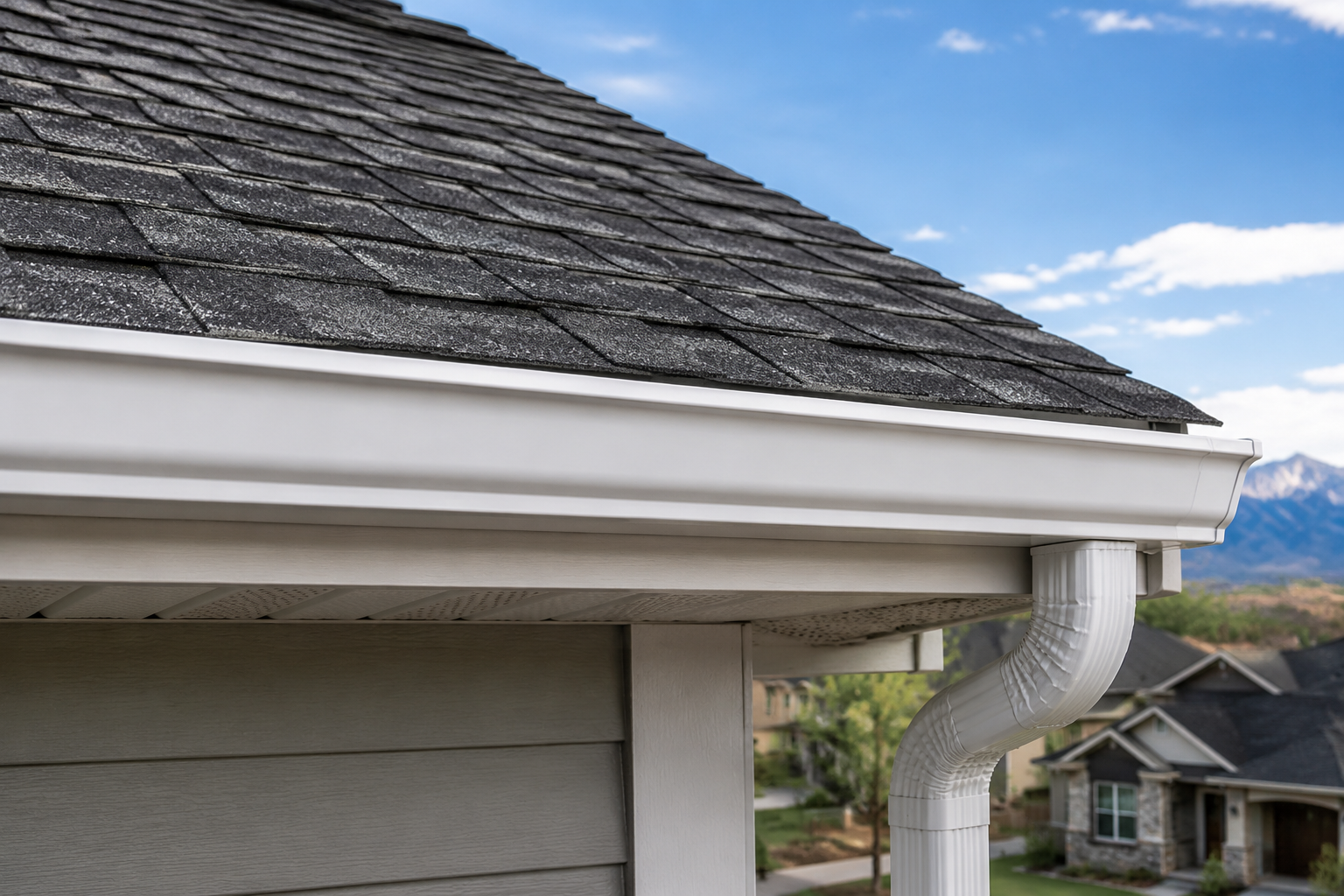
Scoop out the debris, flush the gutters with a hose, and make sure every downspout carries water well away from the foundation. If your gutters are sagging, leaking at the seams, or pulling away from the fascia, fall is a smart time to repair or replace them — our seamless gutter services are built for exactly this kind of Colorado runoff.
Inspect Shingles, Flashing, Vents, and Seals
From the ground with binoculars, or carefully from a stable ladder, scan the roof for shingles that are cracked, curled, lifting at the edges, or missing altogether. Bald patches where the protective granules have washed away are a sign of aging or hail impact and leave the shingle vulnerable to the first hard winter.
Then look at the transitions — the metal flashing around your chimney, skylights, and wall junctions, and the rubber boots around plumbing vents. These seams are where the vast majority of roof leaks actually start, not in the middle of a shingle field. Cracked caulk, rusted flashing, or a split vent boot is cheap to fix now and miserable to discover mid-winter.
Trim Trees and Clear Roof Debris
Overhanging branches drop leaves and needles that trap moisture against the shingles, and they become a hazard the moment they are loaded with snow or ice. A heavy limb that snaps in a January storm can tear through a roof in seconds. Trim anything hanging over or resting on the roof, and sweep debris out of the valleys where it tends to pile up and dam water.
Do Not Ignore Leftover Hail Damage
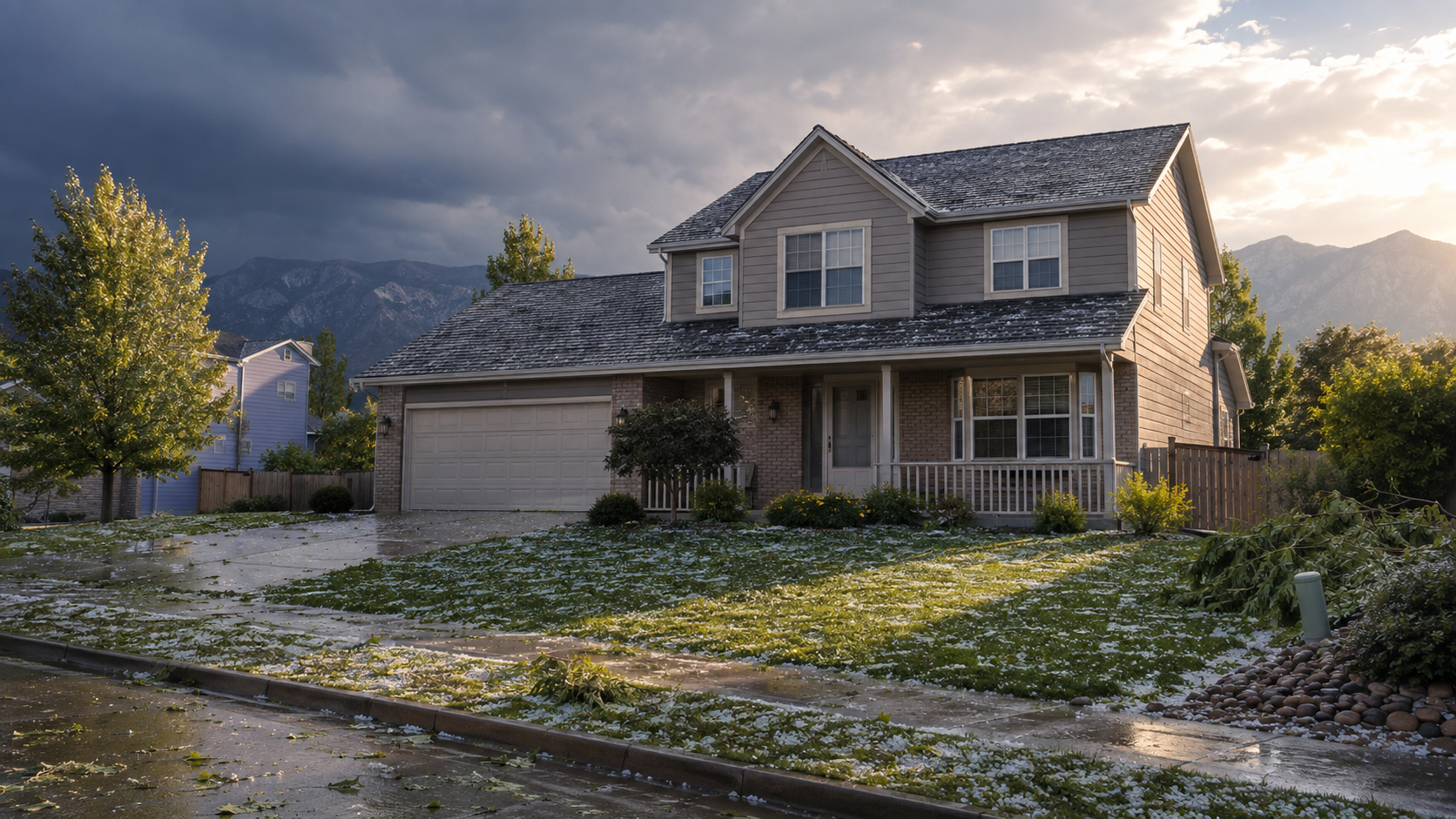
Colorado’s hail season runs hard through the spring and summer, and a lot of homeowners head into fall with damage they never noticed. Hail bruises can be subtle — a soft spot, a small circle of missing granules — but each one is a weak point that winter will pry open. If storms rolled through your neighborhood this year, it is worth learning how to spot hail damage on your roof, and reviewing the right first steps after a hailstorm if you find any.
What to Do If You Find a Problem
A single cracked shingle or a bit of loose flashing is usually a quick, affordable repair — especially caught in the fall. Widespread granule loss, multiple leaks, or an aging roof that has already seen a decade of Colorado weather may be pointing toward a bigger decision. If you are weighing that, our guide on roof repair versus replacement lays out how to think it through honestly.
And if getting on the roof is not something you want to do — which is completely reasonable on a steep or high roof heading into cold weather — that is exactly what a free inspection is for.
Key Takeaways
- Fall is the ideal time to prep a Front Range roof — after hail season, before snow and freeze-thaw.
- Clean gutters and downspouts so melting snow can drain and does not back up into ice dams.
- Inspect shingles, flashing, vents, and seals for cracks, lifting, or missing granules.
- Trim overhanging branches and clear leaves and debris off the roof and out of valleys.
- Don’t ignore leftover summer hail damage — small bruises turn into winter leaks.
- Check the attic for daylight, damp insulation, or musty smells that signal a hidden leak.
- When in doubt, book a free inspection rather than climbing a cold, steep roof yourself.
Get Ahead of Winter With a Free Roof Check
Not sure your roof is ready for Colorado’s snow and freeze-thaw? Our Brighton-based team will inspect it top to bottom and give you an honest assessment — no pressure, no scare tactics.
Prefer to talk it through? Call (720) 235-8159