
Quick Answer
Hail damage often hides in plain sight — the worst damage frequently isn’t visible from the ground. Look for bruised or dented shingles, granule loss (check gutters and downspouts), cracked or missing shingles, and dents on vents, flashing, and gutters. Because even subtle damage shortens roof life and can affect a claim, a professional roof-level inspection after any significant hailstorm is worth your time.
If you live along Colorado’s Front Range, hail isn’t a question of if — it’s a question of when. Brighton, Thornton, Denver, Aurora, and the rest of the metro sit in the heart of what insurance companies call “Hail Alley,” one of the most hail-prone regions in the entire country. We get hit hard, we get hit often, and the damage isn’t always obvious.
Here’s the frustrating part: the worst hail damage usually isn’t the kind you can see from your driveway. Shingles can be functionally destroyed while looking perfectly fine from 30 feet below. Homeowners walk outside after a storm, glance up, see no broken tiles or missing chunks, and assume their roof is fine.
Months later, the leaks start.
This guide walks you through what real hail damage looks like, what to check yourself (safely), and when it’s time to call a professional. If you’ve had a hailstorm in the last 12 months, this matters even if your roof “looks okay.”
Why Hail Damage Hides in Plain Sight
Modern asphalt shingles are designed to take a beating, but hail damage works in layers. A hailstone might not crack a shingle outright, but it can:
- Bruise the underlying mat
- Knock loose the protective granule coating
- Crack the sealant strips holding shingles down
- Compromise the waterproof layer beneath
None of that is visible from the ground. Even from a ladder, you often need to know exactly what you’re looking for. That’s why most roofers — including us — offer free roof inspections after hailstorms. The damage might be there even when you’re sure it isn’t.
8 Signs of Hail Damage to Look For
You don’t need to climb on the roof to check most of these. Start from the ground, work around the perimeter of your house, and use binoculars if you have them.
1. Granules in Your Gutters and Downspouts
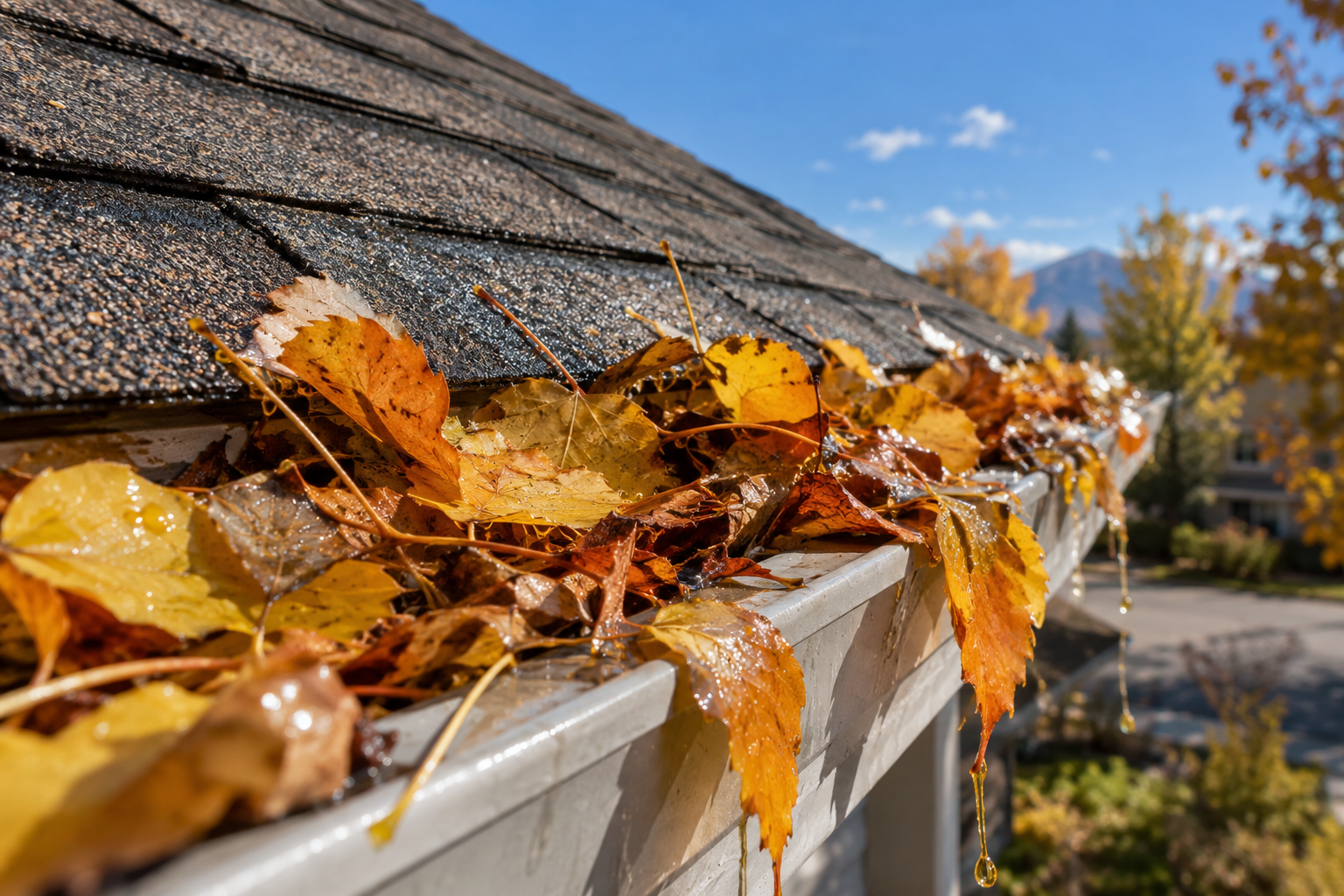
This is the #1 most reliable sign. Asphalt shingles are coated with small mineral granules that protect them from UV rays. Hail knocks those granules loose, and rain washes them into your gutters.
Walk around your house and look at the bottom of your downspouts. See a pile of what looks like coarse black sand? That’s granule loss from your shingles. A little is normal — a lot is a red flag.
2. Dents on Metal Vents, Flashing, and Caps
Hail dents soft metals before it damages shingles. Look at:
- Roof vents (the round metal ones sticking up)
- Flashing around your chimney
- Metal valleys where two roof slopes meet
- The ridge cap along the top of the roof
If those metal surfaces have visible dimples, your shingles took the same hits.
3. Damaged Gutters and Downspouts
Aluminum gutters dent easily. Look along the top edge of your gutters and at the elbow joints in your downspouts. Dents here mean the hail was big enough and hard enough to cause shingle damage too.
4. Bruised or Soft Spots on Shingles
This one usually requires getting on the roof, which we don’t recommend unless you have experience. A bruise on a shingle looks like a dark spot where the granules are gone, sometimes with the underlying mat exposed. If you press on it (carefully), it feels soft, like a bruise on an apple.
This is the damage that worries us most. Bruised shingles will fail within a year or two, often during the next storm.
5. Cracks or Splits
Larger hail can crack shingles outright. Look for jagged splits running through individual shingles, especially toward the upper edges where impact angles are sharpest.
6. Damage to Other Outdoor Items
Take a quick look around your yard:
- Is your patio furniture dented?
- Are window screens torn or pushed in?
- Did the hailstones damage your siding or window frames?
- Are the leaves on your trees shredded?
- How to Spot Roof Damage Before It Becomes a Costly Problem
If hail damaged everything else around your house, it damaged your roof too. Insurance adjusters use these same signs.
7. Water Stains Inside (Weeks Later)
The sneakiest sign of all. Hail damage often doesn’t leak immediately. The compromised shingles still shed most water at first. But over weeks and months, water finds the cracked spots, soaks the underlayment, and eventually shows up as a brown stain on your ceiling or in your attic.
If you see new water stains weeks after a hailstorm, that’s hail damage finally revealing itself.
8. AC Unit Fins Bent or Damaged
Your air conditioning unit sits in the open and takes the same hits as your roof. If the fins are bent flat or the housing is dented, your roof has the same damage at minimum.
What to Do If You Spot Signs of Damage
Do NOT climb on the roof yourself. Even experienced contractors fall. The roof might also have damage that’s structurally unsafe to walk on. It’s not worth the risk.
Instead, do these three things in order:
- Document what you can see from the ground. Take photos of granules in your gutters, dents on vents, damaged AC units, anything you can see clearly. Note the date.
- Call for a free professional inspection. A qualified roofer can safely assess the damage and tell you whether it warrants an insurance claim. We do this for free, no obligation, throughout the Denver metro. Call (720) 235-8159.
- Don’t sign anything immediately. After major hailstorms, out-of-state “storm chaser” companies flood neighborhoods knocking on doors. They want you to sign contracts before you’ve thought it through. A reputable local roofer will give you written estimates and time to decide.
A Note About Your Insurance Claim Window
Most homeowner’s insurance policies in Colorado require you to file hail damage claims within 12 months of the storm. After that, you’re often out of luck — even if the damage is real.
If you suspect hail damage, get an inspection sooner rather than later. We’ve walked too many homeowners through the bad news of discovering damage from a storm 14 months ago.
When You’re Ready
Watchdog Roofing and Restoration provides free, no-pressure hail damage inspections throughout Brighton and the entire Denver metro. We’re a locally owned roofing contractor that specializes in storm damage and insurance claims — meaning we’ll document everything thoroughly for your insurance adjuster and handle the restoration from start to finish.
Call (720) 235-8159 or request a free inspection online.
Key Takeaways
- The Front Range sits in “Hail Alley” — frequent, often-hidden damage
- The worst hail damage usually isn’t visible from the ground
- Signs include bruised shingles, granule loss, and dents on vents/flashing/gutters
- Granules in gutters and downspouts are an easy DIY clue
- Even subtle damage shortens roof life and can affect a claim
- Get a professional inspection after any major hailstorm
- We document what we find; coverage is your insurer’s decision