
Quick Answer
After a Colorado hailstorm, the first 48 hours matter. Check for interior leaks, photograph any visible damage and note the storm date, and schedule a professional roof inspection — but don’t sign with the first crew that knocks. Most hail damage isn’t obvious from the ground, so professional, photo-documented findings are what protect you and your options.
If you live along Colorado’s Front Range, you already know — hail season runs all summer, and a single severe storm can cause thousands of dollars in damage in a matter of minutes. Brighton, Thornton, Commerce City, and most of the Denver metro sit right in one of the most hail-prone regions in the country. So if a storm has just rolled through your neighborhood, the first 48 hours matter.
Here’s a clear, practical homeowner’s guide to exactly what to do — and what not to do — after a Colorado hailstorm.
First: stay inside until the storm fully passes
This sounds obvious, but it’s worth saying. Hail can fall again in waves, and severe storms often produce dangerous wind and lightning. Wait until you’re sure the storm is fully over before stepping outside to assess anything. No piece of property is worth getting hurt over.
Step 1: Document the storm itself
Once it’s safe, start building a record. Insurance companies care about timing, severity, and proof.
- Note the date and approximate time the storm hit.
- Photograph hailstones on the ground next to something for scale — a coin, ruler, or your hand. Hail size matters for insurance claims.
- Save weather reports. Screenshot any local news coverage, National Weather Service reports, or storm tracking that confirms hail in your area.
- Note the direction the storm came from, if you saw it. This sometimes helps explain damage patterns later.
This documentation might feel like overkill, but it’s gold if you end up filing an insurance claim.
Step 2: Do a careful walk-around (from the ground)
Walk the perimeter of your home and look for signs of damage. Do not climb on the roof — it’s dangerous, and damaged shingles can crack further under your weight. From the ground, look for:
- Dents on gutters, downspouts, and metal flashing. Metal shows hail impacts very clearly. If your gutters are dented, your roof almost certainly took hits too.
- Damaged or torn window screens.
- Cracked or split siding. Especially on south- and west-facing walls.
- Granules washing out of downspouts or piling at their base. Looks like coarse black sand.
- Damaged outdoor items — patio furniture, grills, AC units, vehicles. If hail dented those, the roof took the same hits.
- Broken or cracked windows.
- Damaged plants and trees — shredded leaves are a telltale sign of severe hail.
Photograph everything you find, even if it seems minor. Take multiple angles and include something for scale where possible.
Step 3: Check inside your home
Step inside and check:
- Ceilings — especially upstairs rooms — for any new water stains, even small ones.
- Around windows and skylights for water intrusion.
- The attic, if accessible — look for daylight where there shouldn’t be any, or wet spots on insulation or framing.
Interior damage may not appear for days or even weeks, so check again over the following weeks. Sometimes the first sign of a roof breach is a small ceiling stain that wasn’t there before.
Step 4: Schedule a professional roof inspection
Here’s the most important step, and one of the most misunderstood: most hail damage to roofs isn’t visible from the ground.
You can have a roof with significant, insurance-eligible damage and not see a single sign of it from your driveway. The granule loss, bruising, and cracking that hail causes happens on the surface of the shingles, where only someone up on the roof can see it.
That’s why, after any significant hailstorm, a professional roof inspection is worth your time. A reputable local roofer will:
- Get on the roof safely with proper equipment
- Document any damage with photos and measurements
- Give you a written assessment of whether the damage warrants an insurance claim
- Be honest if there’s no damage worth filing for
A good inspection is free, and it costs you nothing whether or not you contact your insurer.
Step 5: Be very cautious about door-to-door contractors
After every significant Colorado hail event, out-of-state crews and storm-chaser operations flood the affected neighborhoods. Some are legitimate; many are not. Common red flags:
- Door-knocking with high-pressure sales tactics — “We’re in your neighborhood today only” or “Sign now to lock in the price.”
- No verifiable Colorado address or local phone number.
- Demanding a deposit before any work begins.
- Offering to “waive your deductible” — this is actually illegal in Colorado and a strong sign you’re dealing with an unethical operator.
- Pushing you to sign an “Assignment of Benefits” without explaining what it means.
Always verify any contractor is licensed, insured, and locally based before signing anything. Colorado law gives you a 72-hour right to cancel any storm-related roofing contract — use it if something feels off.
A trustworthy roofer will be patient, transparent, and totally fine with you taking time to verify them and get a second opinion.
Step 6: If you have damage, contact your insurer — but smartly
If your roof has confirmed hail damage, reach out to your homeowner’s insurance company. A few tips:
- Don’t delay. Most policies have a one- to two-year window to file from the date of the storm.
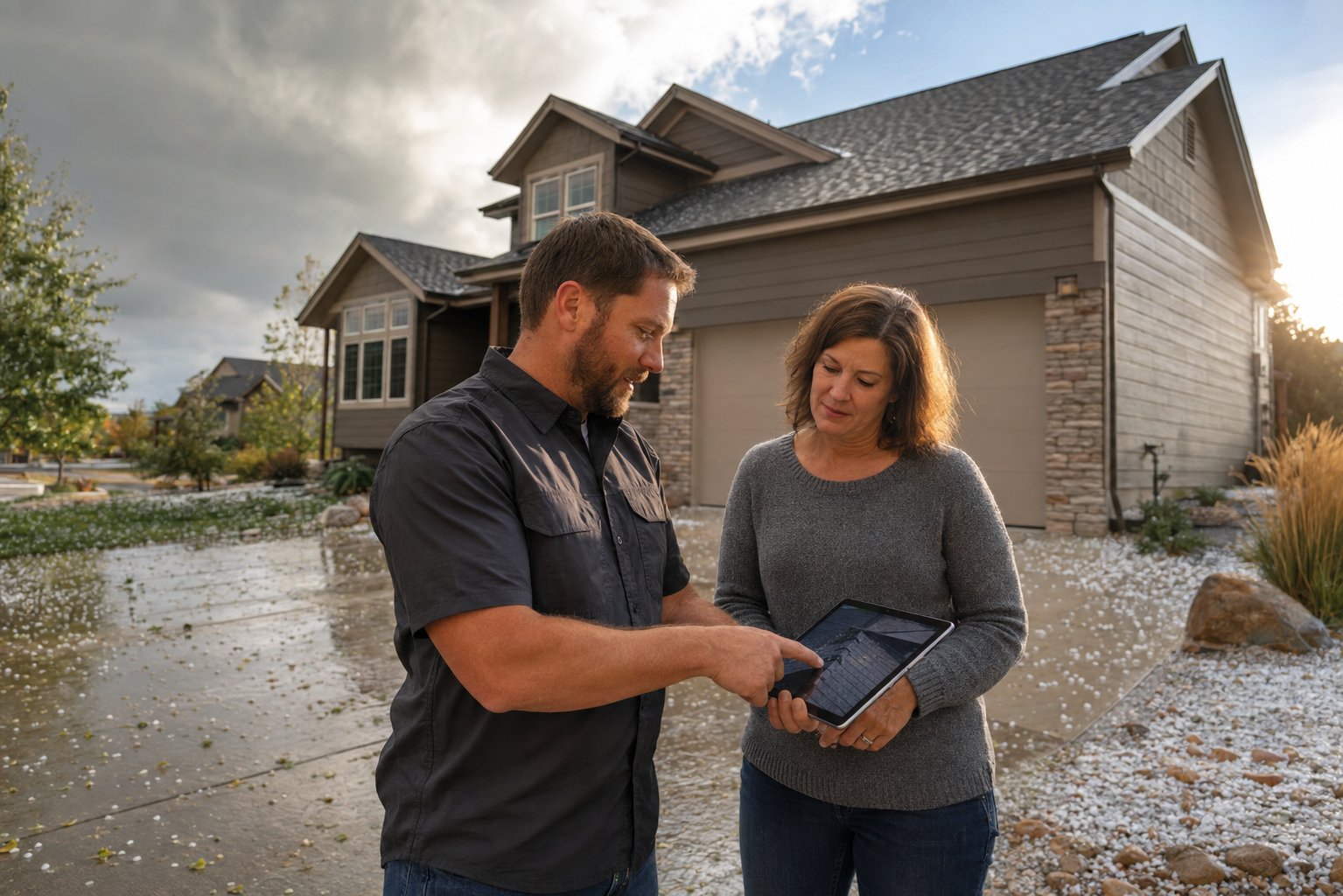
- Have your roofer present for the adjuster’s inspection if possible. Damage decisions get made on the roof, and a roofer pointing out every legitimate area of damage can make the difference between a partial claim and a complete one.
- Review the insurance scope carefully — make sure related damage (gutters, siding, vents, etc.) is included.
For a detailed walkthrough, see our post on [filing a roof insurance claim].
A short reality check
Not every hailstorm causes damage that’s worth a claim — and a good roofer will tell you that honestly. Sometimes the storm sounded scary, but the damage is purely cosmetic and not worth involving insurance. Other times, an unimpressive-looking storm produces hail just big enough to compromise your roof’s integrity. The only way to know which one you’ve got is a proper inspection.
The bottom line
After a Colorado hailstorm:
- Document the storm and any visible damage immediately.
- Don’t climb on the roof yourself.
- Get a free professional inspection from a local, reputable roofer.
- Be wary of door-knockers and high-pressure tactics.
- If you have real damage, get it documented and contact your insurer promptly.
A few hours of attention in the first couple of days can save you thousands of dollars and a lot of headaches down the road.
If a hailstorm has just hit your area and you’d like a professional set of eyes on your roof, we’re happy to help. Our inspections are completely free, with no pressure and no obligation — just an honest assessment of what we find.
Call Watchdog Roofing and Restoration at (720) 235-8159 to schedule your free post-hailstorm roof inspection. Serving Brighton and the entire Denver metro.
Key Takeaways
- The first 48 hours after a hailstorm are the most important
- Note the storm date and photograph any visible interior/exterior damage
- Most hail damage isn’t visible from the ground
- Schedule a professional roof inspection before signing anything
- Beware out-of-state storm chasers and doorstep pressure
- Get a written, photo-documented assessment
- We document the damage; your insurer decides coverage