
Quick Answer
You don’t always have to replace your gutters when you replace your roof, but it is often the smart time to do it. Roofing crews remove the drip edge and disturb the gutters anyway, older gutters may not match the new roof’s drainage, and combining the two jobs saves on labor and mobilization. If your gutters are rusted, sagging, leaking, or undersized for Colorado’s heavy runoff, replacing them alongside the roof protects your new investment and prevents ice dams and foundation issues down the road.
When you are already spending on a new roof, adding gutters to the bill is not always what you want to hear. But it is a fair question, and the honest answer is: it depends on the shape your current gutters are in. For a lot of Colorado homes, replacing the gutters at the same time as the roof is the practical, money-saving choice — and for others, perfectly good gutters can stay right where they are.
Here is how to think it through so you make the call that actually protects your home, not just the one that trims the invoice today.
Why Roof and Gutter Work Overlap
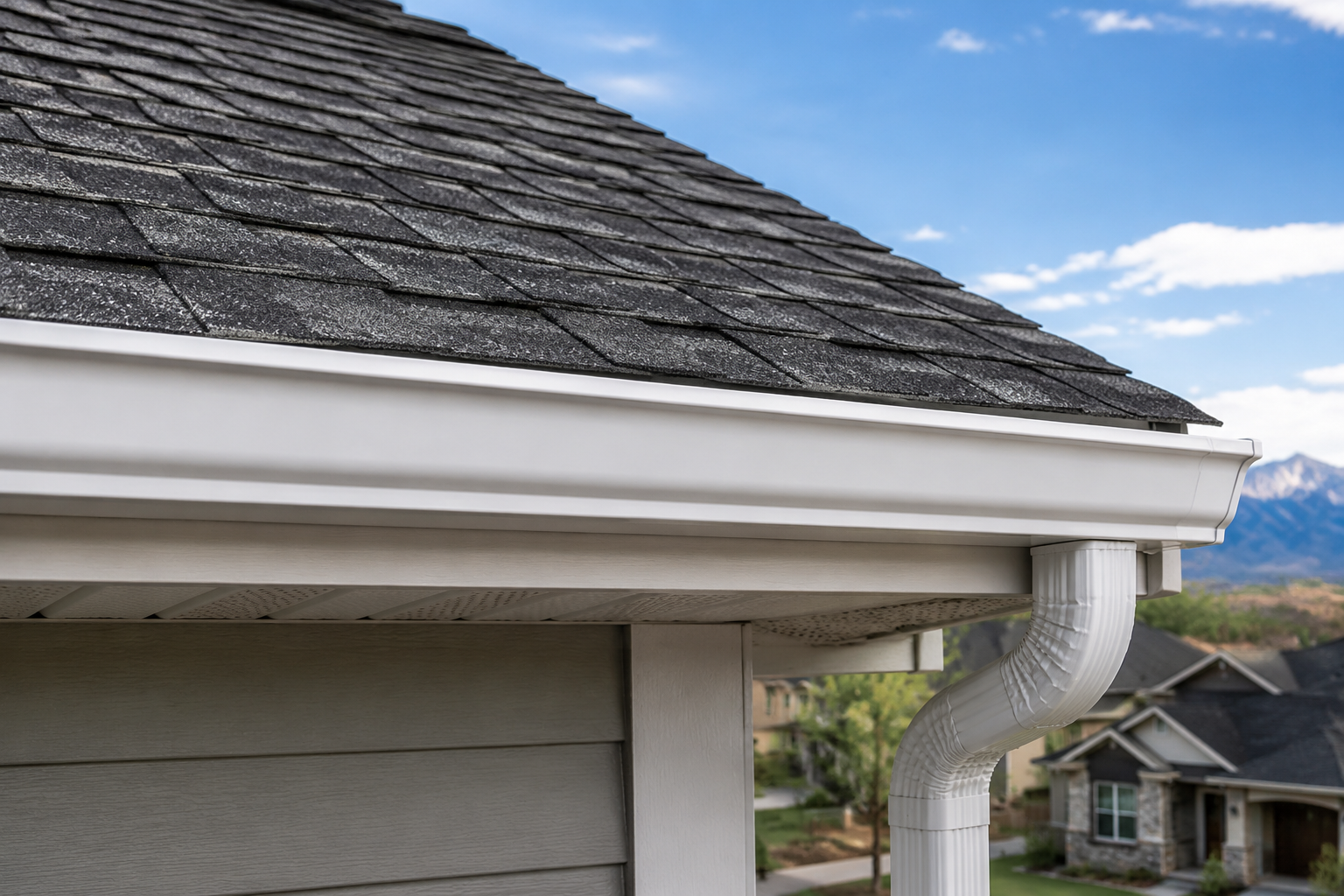
Gutters and roofs are more connected than they look. The bottom course of shingles overhangs the gutter, and a metal drip edge tucks behind or above the gutter to direct water into it. When a crew tears off the old roof and installs the new one, they work right at that edge — removing and reinstalling the drip edge and often loosening or bumping the gutters in the process.
Because the two systems meet at the eaves, the condition of one affects the other. A new roof draining into old, failing gutters is like putting new tires on a car with bad brakes: the expensive part is fine, but the weak link still puts everything at risk.
When You Should Replace Gutters With the Roof
Consider replacing the gutters at the same time if any of these apply:
- The gutters are rusted, cracked, or leaking at the seams
- They sag, pull away from the fascia, or hold standing water
- They are undersized and overflow during heavy Colorado downpours
- They are old sectional gutters with lots of joints that leak over time
- The fascia or wood behind them shows water damage or rot
- You have had recurring ice dams or foundation moisture
In these cases, coordinating the work makes sense on every level. You avoid paying a crew to come out twice, you get a drainage system matched to your new roof, and you protect the roof, the fascia, and the foundation all at once.
When You Can Keep Your Existing Gutters
Replacement is not automatic. If your gutters are relatively new, seamless, properly sized, and in good condition — draining cleanly with no leaks or sag — there may be no reason to replace them. A good roofer will simply protect them during the tear-off, reset the drip edge correctly, and leave a working system alone. Anyone who insists you must replace healthy gutters is worth a second look; our guide on questions to ask a roofing contractor before you sign can help you tell honest advice from an upsell.
Why Seamless Gutters Make Sense in Colorado
If you do replace, seamless gutters are usually the better long-term choice on the Front Range. Traditional sectional gutters are joined every few feet, and every joint is a future leak — a real liability in a climate that freezes and thaws constantly. Seamless gutters are formed from a single continuous piece with joints only at the corners and downspouts, so there is far less to fail. Our seamless gutter services are sized for the heavy rain and snowmelt Colorado homes actually deal with.
The Cost Advantage of Doing Both at Once
Beyond the roofing benefits, there is a straightforward financial reason to combine the projects: shared labor and setup. A crew is already on site, already working at the roof edge, already set up with ladders and staging. Adding gutters to that same visit is far cheaper than scheduling a separate gutter job weeks later. If you are budgeting the whole project, our overview of how to pay for a new roof in Colorado covers ways to fold related work into your plan.
The Bottom Line
Replacing gutters with your roof is not mandatory, but it is often the wise, cost-effective move — especially if your current gutters are aging or already giving you trouble. The best approach is to have your roofer assess the gutters honestly as part of the roof inspection and tell you plainly whether they should be replaced now or can wait. That is exactly the kind of straight answer we aim to give.
Key Takeaways
- Replacing gutters with the roof is optional, but frequently the most cost-effective timing.
- Roofers already disturb the drip edge and gutters, so coordinating the work avoids doing it twice.
- Old, sagging, or leaking gutters can undermine a brand-new roof and cause ice dams.
- Seamless gutters resist leaks better than sectional gutters in Colorado’s freeze-thaw climate.
- Properly sized gutters and downspouts matter for heavy Front Range rain and snowmelt.
- Combining both projects usually lowers total labor and mobilization costs.
- If your gutters are newer and in good shape, keeping them can be perfectly fine.
Roof and Gutters, Done Right Together
Planning a roof replacement? We’ll take an honest look at your gutters too and tell you whether they should be replaced now or are fine to keep — no upsell. One coordinated project, one clean result.
Questions about your gutters? Call (720) 235-8159