Last updated: August 2026 · By David Lux, Owner, Watchdog Roofing and Restoration · Featured on FOX21 News
Quick Answer
Severe thunderstorms and hail hit Centennial and much of the Denver metro over the weekend of August 15–16, 2026, with parts of Douglas and Arapahoe counties seeing extreme hail accumulation, damaging winds, and flash flooding. If your home was in the path, the smart steps are: document any visible damage with dated photos from the ground, check your attic and ceilings for leaks, avoid climbing on your roof, be cautious of door-knocking “storm chaser” contractors, and schedule a professional inspection before filing an insurance claim. Acting within the first days or weeks matters — both for protecting your home and for your insurance claim.
What Happened This Weekend
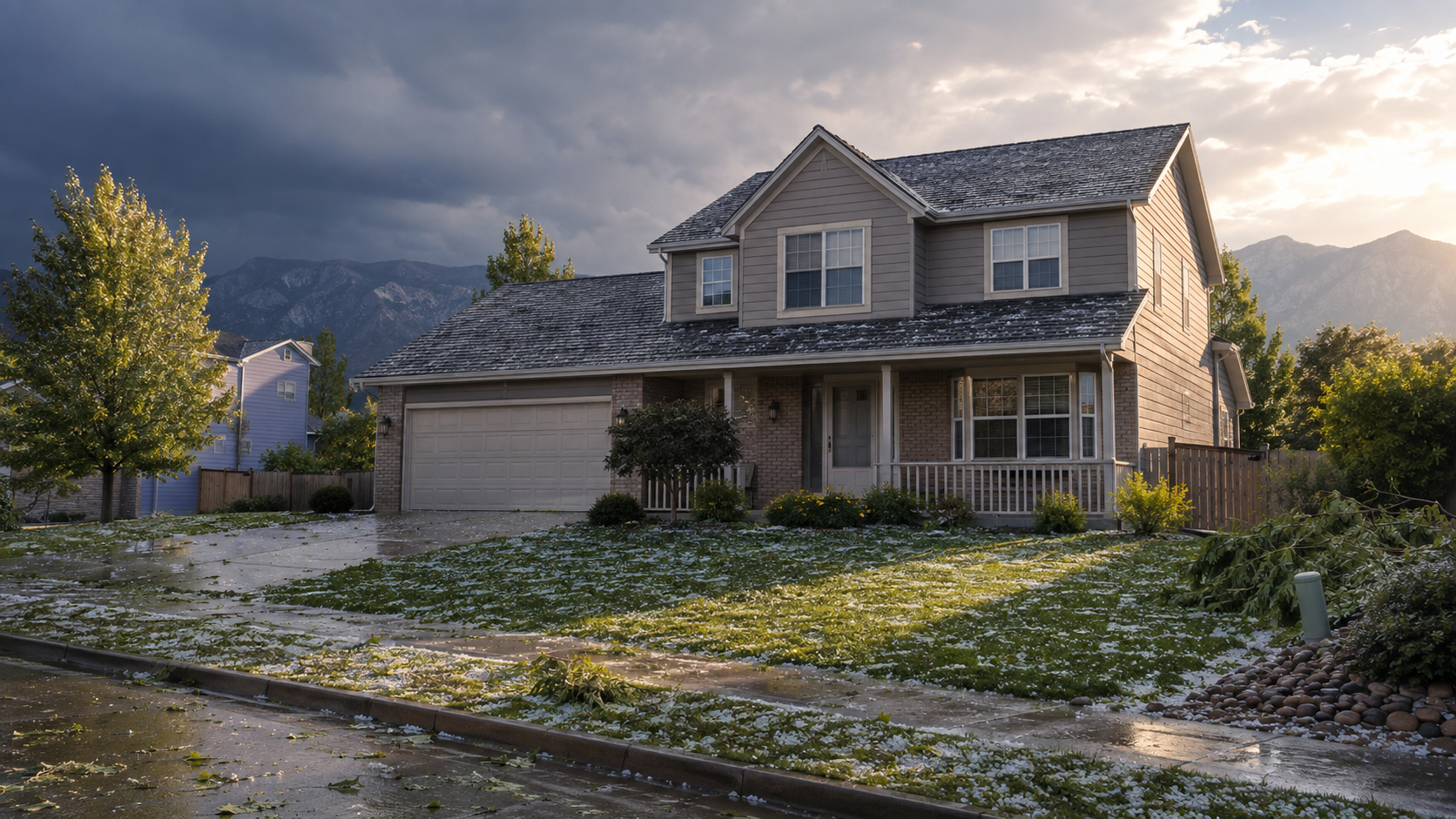
This past weekend brought another round of serious severe weather to the Denver metro. On Saturday, August 15 and into the 16th, powerful thunderstorms rolled across the region — and some areas got hit hard. Parts of Douglas and Arapahoe counties saw dramatic hail accumulation and heavy rain that flooded roadways and stranded drivers, with emergency crews responding to multiple water rescues.
Centennial specifically sat under severe thunderstorm and flash flood warnings, with reports of hail, strong winds gusting up to around 60 mph, and rapid street flooding. Surrounding communities — Parker, Lone Tree, Littleton, Englewood, Greenwood Village, Aurora, and others across the south and central metro — were all in the mix as storms tracked through the area.
If you’re in Centennial or anywhere across the Denver metro and you’re wondering whether your roof took damage, this guide walks you through exactly what to do next.
Why Colorado Hail Is So Hard on Roofs
Colorado sits in the heart of “Hail Alley” — one of the most hail-prone regions in the country. Our storms produce hail that ranges from pea-sized to larger than golf balls, and even smaller hail driven by 60 mph winds can bruise shingles, knock off protective granules, and shorten your roof’s lifespan by years.
The tricky part: hail damage often isn’t visible from the ground, and sometimes not even obvious to an untrained eye up close. A roof can look “fine” while having dozens of impact points that compromise the shingle’s integrity and will lead to leaks months later. That’s why a professional inspection matters after a significant storm — and why insurance companies have specific timelines for claims.
What to Look For After the Storm
Here’s what you can safely check yourself — all from the ground or inside your home. Do not climb onto your roof. It’s dangerous, especially when wet, and you can cause more damage walking on impacted shingles.
From the ground, look for:
- Dented or dinged gutters, downspouts, and gutter screens
- Damaged or torn window screens
- Dents on metal surfaces — garage doors, AC units, mailboxes, grills, patio furniture
- Shingle granules collecting in gutters or at the bottom of downspouts (looks like coarse black sand)
- Pieces of shingle or roofing debris in your yard
- Dents or cracks in fencing, decking, or siding
- Damaged or shredded plants and leaves (an indicator of hail severity)
Inside your home, look for:
- Water stains on ceilings or upper walls
- Active drips or moisture in the attic
- Daylight visible through the roof boards in the attic
- Damp insulation
On your vehicles:
- Dents on your car’s hood, roof, or trunk are one of the clearest signals of hail large enough to damage your roof, too
If you spot dents on your car but “nothing” on your roof, don’t assume the roof is fine — get it checked. The car is just easier to see.
To go deeper on identifying damage, see our full guide on spotting hail damage on your roof.
The Steps to Take (In Order)
Here’s the process we recommend to every homeowner after a significant storm:
Step 1: Document Everything Immediately
Take dated photos of anything you can see — dented gutters, debris, interior stains, dented vehicles, damaged screens. Timestamp matters for insurance. Do this before anyone touches or repairs anything.
Step 2: Check for Active Leaks
Look in your attic and at your ceilings. If water is actively coming in, put a bucket down and, if you can safely do so, move belongings away from the area. Active leaks make your inspection more urgent.
Step 3: Schedule a Professional Roof Inspection
Get a qualified, local roofing contractor to perform a thorough inspection and document any damage with photos. A good inspection tells you whether you have real damage worth filing a claim over — before you involve your insurance company. We provide these inspections free across the Denver metro.
Step 4: Understand Your Insurance Position
If there’s legitimate damage, your inspector’s documentation helps you file a strong claim. Colorado has specific rules protecting homeowners here (more on that below). Our step-by-step guide to filing a roof insurance claim in Colorado walks through the whole process.
Step 5: Choose a Reputable Local Contractor
If you need repairs or a replacement, work with an established, local, licensed contractor — not whoever knocks on your door first. This is where a lot of homeowners get burned.
Watch Out for Storm Chasers
After every major Colorado storm, out-of-state “storm chaser” crews flood the affected neighborhoods, knocking on doors and pressuring homeowners to sign contracts on the spot. Some are legitimate. Many are not — and they’re the reason we were featured on FOX21 News warning Colorado homeowners about exactly this.
Red flags to watch for:
- High-pressure tactics to sign a contract immediately
- Offers to “waive” or “eat” your insurance deductible (this is illegal in Colorado)
- No local address or Colorado business presence
- Asking for large payments upfront
- Pressuring you to sign before your insurance company inspects
A couple of Colorado laws are worth knowing here. Contractors are prohibited by law from paying, waiving, or absorbing your insurance deductible — if someone offers this, that alone is a reason to walk away. And you have a 72-hour right to cancel any roofing contract you sign in connection with an insurance claim. Our full breakdown is in how to avoid roofing scams in Colorado, and our post on the 5 mistakes homeowners make after storm damage covers the traps to avoid.
How Watchdog Roofing Can Help
We’re a locally owned, licensed roofing contractor based in Brighton, serving the entire Denver metro and Front Range. When storms like this weekend’s roll through, here’s how we help:
Free, no-pressure inspections. We’ll come out, safely get on your roof, and document its condition with photos. You get a written assessment whether you hire us or not — no obligation, no hard sell.
Insurance claim expertise. We’ve handled hundreds of hail damage claims across the Front Range. We document damage properly, meet with your adjuster, and advocate for a fair settlement. We follow Colorado law to the letter — we will never offer to absorb your deductible, because that’s illegal and it’s a hallmark of the scammers we warn people about.
Honest assessments. If your roof doesn’t have damage worth filing a claim over, we’ll tell you that. We’re not here to manufacture a job — we’re here to build a reputation that lasts in this community.
Local accountability. We have a real Brighton office, a real phone number, and we’ll be here long after the storm chasers have moved on to the next state.
We serve homeowners across the metro, including Aurora, Thornton, Commerce City, Castle Rock, Brighton, and the surrounding communities. We handle storm damage restoration, residential roofing, and complete exterior repairs.
Frequently Asked Questions
How soon after a storm should I get my roof inspected?
Sooner is better — ideally within a few days to a couple of weeks. Insurance policies often have time limits for filing storm-related claims, and prompt documentation makes for a stronger claim. Getting an inspection early also catches active leaks before they cause more interior damage.
Do I need to file an insurance claim right away?
Get a professional inspection first. You want to know whether you have legitimate, claimable damage before involving your insurer. A qualified contractor can tell you if the damage is worth filing over, and can document it properly to support your claim.
A contractor knocked on my door offering a free roof. Should I sign?
Be very cautious. High-pressure door-knocking after storms is the most common storm-chaser tactic. Never sign on the spot, never work with anyone who offers to waive your deductible (it’s illegal in Colorado), and remember you have 72 hours to cancel any storm-related roofing contract. Get a second opinion from an established local contractor first.
My neighbor’s roof was damaged but mine looks fine. Should I still get it checked?
Yes. Hail damage is often invisible from the ground, and damage can vary house-to-house even on the same street depending on the angle and size of the hail. If your area was hit, a free inspection is worth it for peace of mind.
What does a roof inspection cost?
At Watchdog Roofing, storm damage inspections are free across the Denver metro, with no obligation. You get a written, photo-documented assessment whether or not you choose to work with us.
Key Takeaways
- Severe storms and hail hit Centennial and the Denver metro the weekend of August 15–16, 2026
- Hail damage is often invisible from the ground — check gutters, vehicles, and interior ceilings for clues
- Never climb on your own roof; get a professional inspection instead
- Document everything with dated photos before repairs
- Get an inspection before filing an insurance claim
- Be extremely cautious of door-knocking storm chasers — never sign on the spot, and never trust anyone offering to waive your deductible
- You have a 72-hour right to cancel any storm-related roofing contract in Colorado
Get a Free Storm Damage Inspection
If your Centennial or Denver metro home may have taken damage this weekend, we’re here to help — honestly and without pressure.
Call (720) 235-8159 or request a free inspection online. We respond within one business day.
Request a Free Inspection📍 30 S. 7th Ave, Suite 400B, Brighton, CO 80601
You can verify our credentials through the Colorado Roofing Association and the BBB Denver.