
Quick Answer
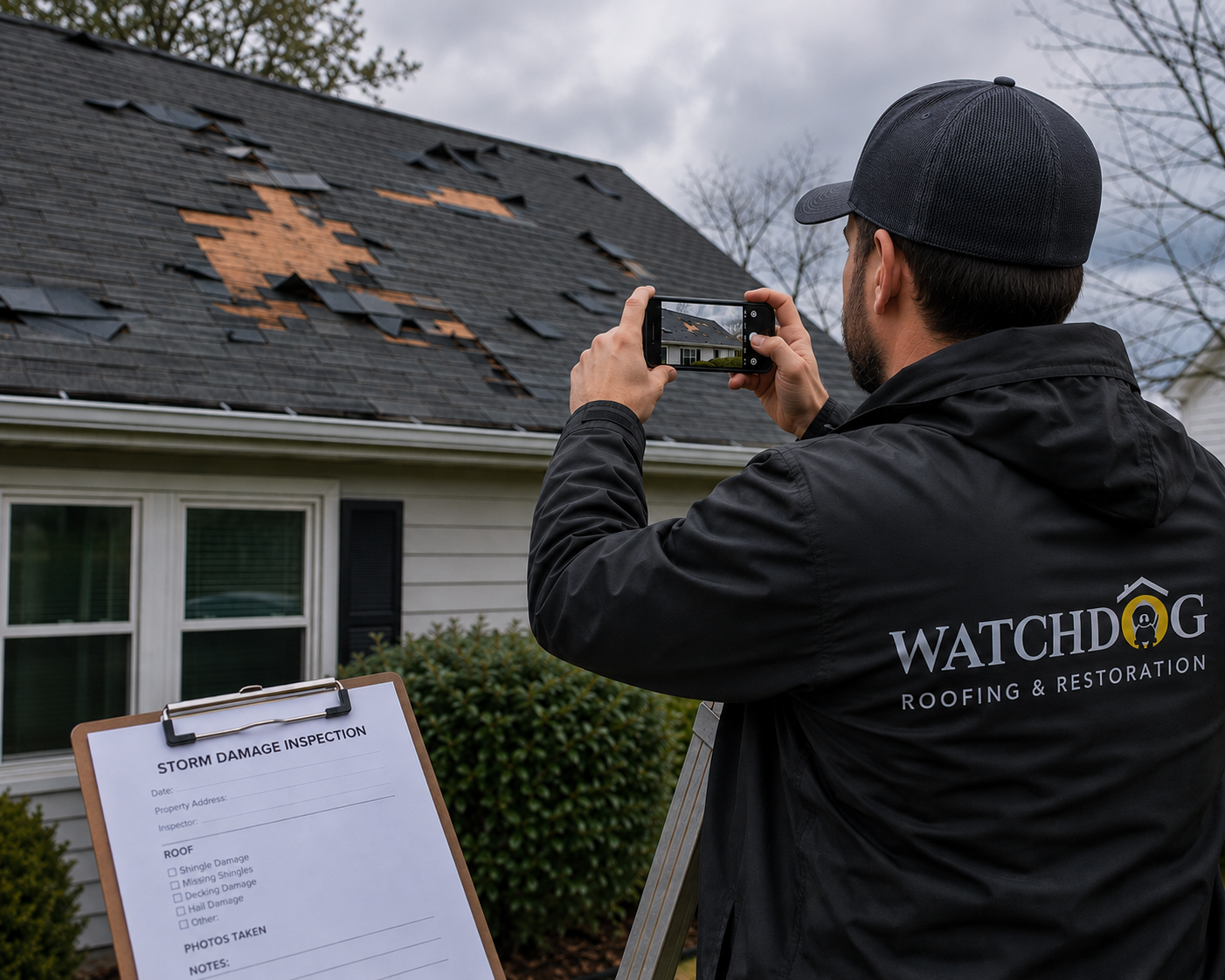
If a hailstorm or high winds hit your Colorado roof, the most important first step is simple: get the damage professionally inspected and documented before you do anything else. A lot of storm damage isn’t visible from the ground. We inspect the roof, document everything with photos, and give you a clear written assessment — then coverage is your insurance carrier’s decision, not ours.
If a hailstorm or high winds have battered your Colorado roof, the most important thing you can do is simple: get the damage looked at and documented by a professional before you do anything else. Colorado sees more hail than almost anywhere in the country, and a lot of storm damage isn’t visible from the ground — which is exactly why a careful inspection matters. Here’s what to do after a storm, what to expect, and how an honest roofer fits into the picture.
1. Stay safe, then look for the obvious signs
Right after a storm, keep both feet on the ground. From the yard you can often spot early warning signs: dented gutters and downspouts, dings on metal vents or flashing, shingle granules washed into the gutters or collecting at the base of downspouts, and shingle pieces in the yard. Inside, check ceilings and attic spaces for any water staining. If you see any of these, it’s worth having the roof itself inspected. Not sure what to look for? See our guide on how to spot hail damage on your roof.
2. Get a professional roof inspection
Hail and wind damage is often subtle — bruised shingles, fractured mats, and loosened granules that shorten a roof’s life without leaking right away. A qualified roofer will get up on the roof safely, inspect every slope, and photograph what they find. A ground-level “drive-by” or a quick look from a ladder isn’t enough. At Watchdog, every inspection is free, with no obligation.
3. Know what a good inspection gives you
After the inspection, you should walk away with a clear, professional record: exactly what damage exists, what caused it, and an itemized estimate of the repairs it calls for. That documentation is yours to keep — and yours to submit to your insurer if you decide to. Good documentation is the single most useful thing you can have after a storm, because it puts everyone on the same page about the facts.
4. Coverage is your insurer’s decision
Here’s an important distinction: your insurance carrier — not your roofer — decides what your policy covers. A roofing contractor’s job is to inspect and document the damage and prepare an honest repair estimate. Watchdog is a licensed Colorado roofing contractor, not a public insurance adjuster. We don’t interpret your policy, negotiate with your insurer, or handle or file your claim, and we’d never promise a particular outcome. Once you’ve hired us for the repairs, we’re glad to discuss the scope of repairs with your insurer, as Colorado law allows.
5. Be wary of “we’ll cover your deductible” offers
If a contractor offers to pay, waive, or “eat” your insurance deductible — or dangles a “free roof” — walk away. In Colorado it’s illegal: state law (SB 12-038, C.R.S. § 6-22-105) makes it a crime for a roofer to pay, rebate, or absorb any part of your deductible. Contractors who offer it are breaking the law and can put you at risk. An honest estimate and an honest deductible are how you know the price is real.
6. Choose a local, licensed roofer
After a big Colorado storm, out-of-state “storm chasers” flood the neighborhood, collect checks, and disappear. Protect yourself by hiring a licensed, insured, local company with a real address and a reputation to protect. Ask for proof of license and insurance, check reviews, and make sure the workmanship comes with a written warranty.
The bottom line
After a Colorado hailstorm, your best first step is a thorough, documented roof inspection from a roofer you trust. Get the facts on paper, understand that coverage is your carrier’s call, and choose a local contractor who’ll do the roof right. If your roof took storm damage, schedule a free inspection with Watchdog or call (720) 235-8159 — we’ll document what we find and give you a clear, honest estimate. Learn more about our storm damage restoration work.
Key Takeaways
- Get the damage professionally inspected and documented first
- Much storm damage isn’t visible from the ground
- A good inspection gives you clear photos and a written assessment
- Coverage is always your insurer’s decision, not a contractor’s
- Be wary of “we’ll cover your deductible” offers — they’re illegal in Colorado
- Choose a local, licensed, insured roofer you can verify
- We document the damage; you and your carrier decide the next steps