Quick Answer
If a hailstorm just hit your Front Range home, use the first 72 hours wisely: note the storm date, watch for interior leaks, and get a professional roof inspection — but don’t sign with the first door-knocker. A lot of hail damage isn’t visible from the ground, so a careful, photo-documented inspection is what protects you. We inspect and document the damage; your insurance carrier decides coverage.
Multiple communities across Colorado’s Front Range have been hit by significant hail storms recently — including Denver, Castle Rock, Johnstown, Strasburg, Bennett, and Colorado Springs. If your home is in one of these areas, or anywhere along the Front Range that saw hail activity, the next 72 hours matter more than you might think.
Here’s an honest, no-fluff guide to what Colorado homeowners should do right now.
The Storms That Hit — And Why This Matters
Colorado’s Front Range sits in what insurance companies call “Hail Alley” — one of the most hail-prone regions in the United States. Recent storm activity has swept across a wide corridor, from Johnstown in the north down through the Denver metro, out to eastern communities like Strasburg and Bennett, and south into Castle Rock and Colorado Springs.
If you’re a homeowner in any of these areas, don’t assume you’re fine just because your roof looks normal from the ground. Most hail damage isn’t visible from your driveway. It’s on your roof plane, on flashing, and on vent boots — places you can’t see without getting up there.
The clock also matters. Insurance policies typically have time limits for filing storm damage claims, and physical evidence of hail damage begins fading almost immediately as UV exposure works on newly-exposed asphalt. Waiting doesn’t just delay repairs — it can cost you the claim entirely.
What to Do in the First 24-48 Hours
1. Document conditions before touching anything
Take dated photos of your property from the ground:
- Multiple angles of your roof from the yard
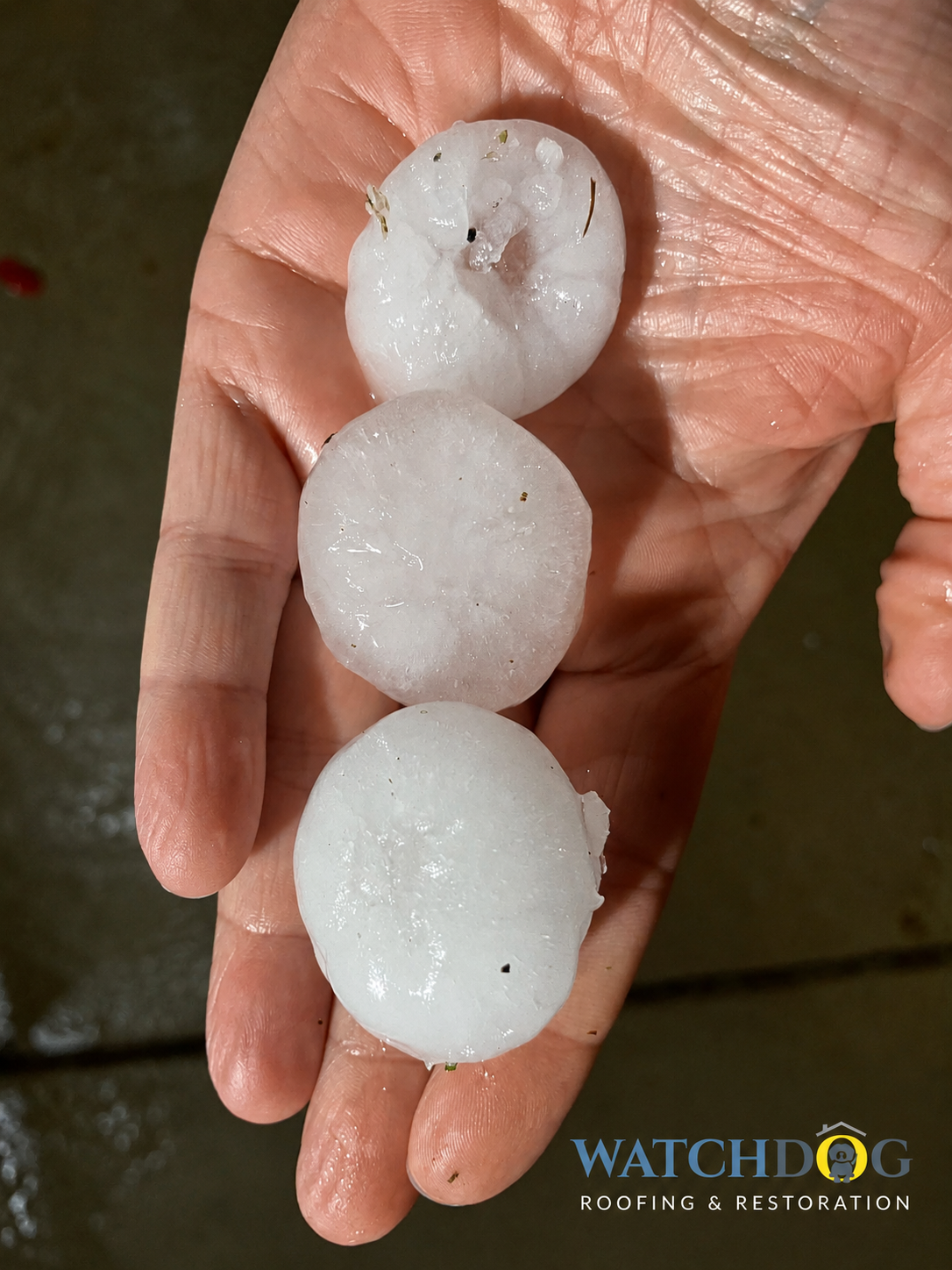
- Any hail still on the ground (put a coin next to it for scale)
- Damage to cars, fences, siding, or landscaping
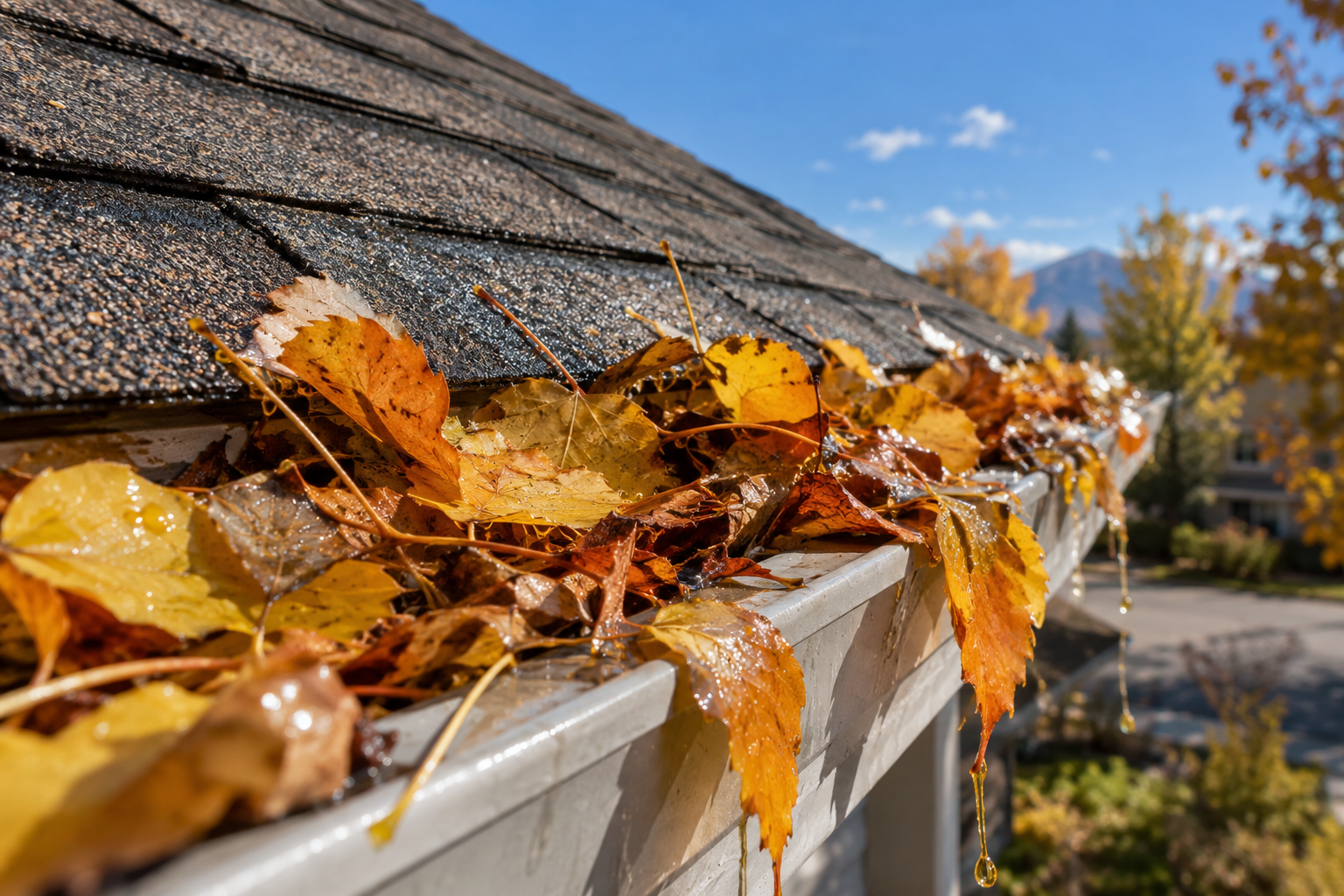
- Broken tree branches or leaf litter (this indicates storm severity)
These photos become important evidence for insurance claims. Timestamps matter.
2. Check for obvious interior damage
- Water stains on ceilings (may take 24-72 hours to appear)
- Water in the attic or around vents
- Debris in gutters or downspouts
- Granules from shingles collecting on the ground near downspouts
- How to Spot Roof Damage Before It Becomes a Costly Problem
3. Do NOT climb your roof yourself
We covered this in detail in our post on 5 mistakes homeowners make after storm damage — climbing your own roof is the single most common mistake, and it’s how homeowners end up in the ER after major storms. Wait for a professional inspection.
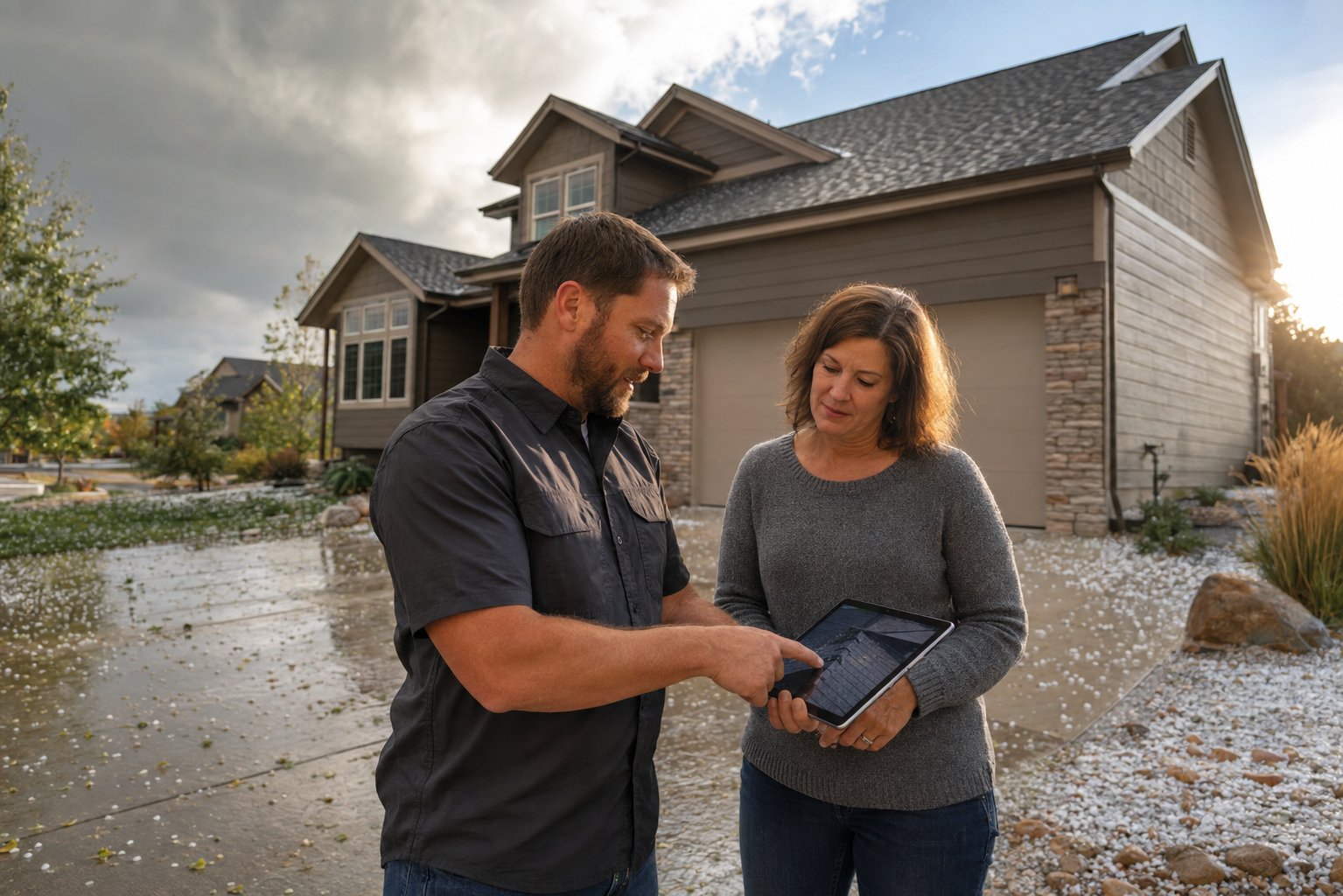
4. Schedule a free inspection with a verified local contractor
Every reputable roofing contractor in Colorado offers free post-storm inspections. Get one on the calendar quickly — but do NOT sign anything until you’ve verified who you’re talking to.
The Storm Chasers Are Already Here
Within 48 hours of any major Front Range hail event, out-of-state contractors flood the area. They arrive in convoys, knock on doors, offer inflated promises, and pressure homeowners to sign contracts on the spot.
Watchdog Roofing was recently featured on FOX21 News discussing exactly this problem. Our full breakdown of the biggest red flags is in our guide to avoiding roofing scams in Colorado, but here are the top three warning signs:
High-pressure “sign right now” sales tactics — Legitimate contractors give you time to research and get other estimates.
Contractors offering to “waive” or “absorb” your insurance deductible — This is illegal in Colorado under CRS 6-22-101. Any contractor who offers this is either willing to break the law or planning insurance fraud.
Out-of-state license plates and no verifiable local address — After the storm work is done, these crews disappear. When something goes wrong two years later, you’ll never find them again.
The best defense: call a local contractor you can verify BEFORE the door-knockers show up. Get on their inspection schedule proactively rather than reactively.
How to Spot Hail Damage on Your Roof
Once a professional gets up there, here’s what they’ll be looking for. We covered this in depth in our full guide on spotting hail damage on your roof, but the top signs include:
Bruising or dimpling on shingles — Hail impacts leave circular indentations where granules have been knocked loose. These look like dark circles on your shingles.
Granule loss — Look for asphalt granules collecting in gutters, on the ground, or in downspout splash zones. Fresh granule loss is a strong hail indicator.
Damage to metal components — Dents on gutters, vent covers, flashing, HVAC units, and metal roof caps. These are among the easiest hail markers to spot.
Exposed asphalt — After granules are knocked off, the underlying asphalt becomes visible. UV exposure will start degrading it within days.
Cracked or missing shingles — Larger hail can outright fracture shingles or knock them off entirely.
Learn more about how Colorado’s climate affects roof lifespan in our guide on how long a roof really lasts in Colorado.
The Colorado Insurance Claim Process
If your roof has hail damage, the next step is filing an insurance claim. Colorado follows a well-defined process, but there are several places homeowners commonly get tripped up. Our step-by-step guide to filing a roof insurance claim in Colorado walks through the complete process, but the short version:
- Document the damage with photos before anyone touches anything
- Contact your insurance company (usually a phone call or app submission)
- Get an inspection from a local, licensed roofer WHO IS NOT the storm chaser at your door
- Meet with your insurance adjuster (ideally with your contractor present)
- Review the adjuster’s estimate carefully — first offers are often low
- Get written approval before any work begins
Colorado protection tip: You have 72 hours by state law to cancel any signed roofing contract. If you signed under pressure and have second thoughts, use that window.
City-by-City Notes
Here’s a quick note on each of the recently-affected areas:
Denver — Full metro coverage. If your home is anywhere in Denver proper, we provide free inspections and thorough damage documentation. We regularly work Denver neighborhoods including Green Valley Ranch, Stapleton/Central Park, Park Hill, and many others.
Castle Rock — See our dedicated Castle Rock roofing services page for local details. Castle Rock’s elevation and Palmer Divide exposure make hail damage particularly severe here. Response times are 1-2 business days for Castle Rock inspections.
Johnstown — Johnstown sits at the outer edge of our regular service area but we regularly work northern Colorado for insurance claims and major projects. Call us to confirm current availability for your Johnstown property.
Strasburg — Strasburg is included in our Google Business Profile service area. As a smaller community with fewer local roofing options, Strasburg homeowners often benefit from working with an established Denver metro contractor rather than a temporary storm chaser crew.
Bennett — Bennett sits along I-70 east of the metro. We can serve Bennett properties for major projects — call to discuss timing.
Colorado Springs — Colorado Springs is outside our regular service area (approximately 65 miles south of our Brighton office). If you’re a Colorado Springs homeowner, we’d recommend finding a locally-based Colorado Springs contractor. Use the Colorado Roofing Association directory to find verified local contractors, and reference the BBB for complaint records. Everything else in this guide applies — document damage quickly, don’t sign under pressure, and know your 72-hour cancellation right.
We also serve other affected areas including Aurora, Thornton, and Commerce City.
The Bottom Line
Recent hail across Colorado has damaged more roofs than most homeowners realize. If you’re anywhere in the Denver metro, Front Range, or Palmer Divide region, get a free inspection scheduled soon — before physical evidence of damage fades and before the storm chasers pressure you into a bad contract.
The right process is:
- Document everything today
- Get a free inspection from a verified local contractor this week
- Only contact your insurer if damage is confirmed
- Never sign with the first door-knocker who shows up
- Never work with anyone offering to “waive” your deductible
Schedule Your Free Colorado Hail Damage Inspection
Watchdog Roofing and Restoration provides free roof inspections throughout the Denver metro and Front Range. Our team has handled hundreds of hail damage insurance claims across the region, and we know exactly what to document, how to work with adjusters, and how to advocate for a fair settlement.
We specialize in storm damage restoration — including hail damage assessment, insurance coordination, and full residential and commercial roof replacement when needed.
Call (720) 235-8159 or request a free inspection online — we respond within one business day with next steps.
📍 30 S. 7th Ave, Suite 400B, Brighton, CO 80601
Key Takeaways
- Recent hail hit Denver, Castle Rock, Johnstown, Strasburg, Bennett and more
- The first 72 hours matter — record the storm date and any visible damage
- Much hail damage is invisible from the ground; get a roof-level inspection
- Storm chasers flood neighborhoods fast — verify licensing before signing
- Get a written, photo-documented assessment before any repairs
- We document the damage; your insurer decides coverage
- Free inspections across the Front Range, whether you hire us or not