Ask any roofer along the Front Range what causes the ugliest winter phone calls, and you’ll hear the same two words: ice dams. They’re the ridge of ice that builds up at the edge of a roof, and by the time water is staining your ceiling in January, your options are expensive and cold. The good news is that knowing how to prevent ice dams in Colorado is mostly a fall project, and you still have time.
Here in Brighton and across Adams County, the first hard freeze usually lands in early to mid October. That gives you a few good weekends to get ahead of it. Here’s what ice dams are, why Colorado homes are practically built for them, and what actually works to stop them.
What Is an Ice Dam, and Why Do Colorado Roofs Get Them?
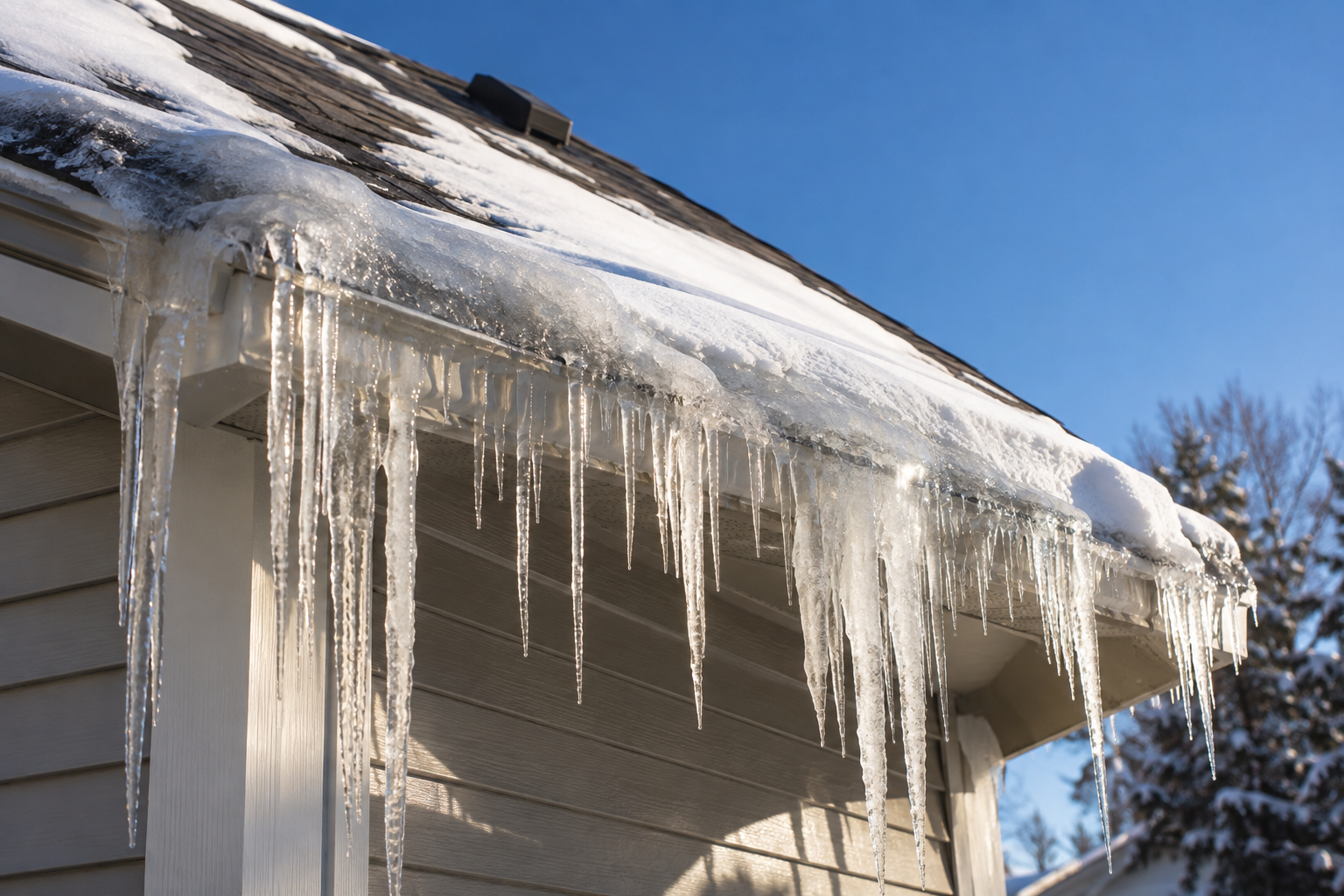
An ice dam forms when the upper part of your roof is warm enough to melt snow while the edge stays frozen. Meltwater runs down the slope, hits the cold eave, and refreezes into a growing wall of ice. Each melt cycle adds another layer.
Colorado is ideal ice dam country. Our sunny winter days and bitter nights run the freeze-thaw cycle constantly, and heavy, wet snows load the roof with raw material. Add an attic that leaks warm air from the house below, and the melt-refreeze machine runs even on cloudy days.
How Do Ice Dams Damage a Roof?
The dam itself isn’t the real problem; it’s the pool of meltwater trapped behind it. Shingles are designed to shed water flowing downhill, not to hold back standing water. Once the pool gets deep enough, water works up under the shingles, into the roof deck, and eventually through to your insulation, ceilings, and walls.
Ice dams also tear up gutters, loosen shingles at the eaves, and soak attic insulation, which quietly ruins its insulating value. If ice dam water does get inside, document everything with photos and dates; our guide to filing a roof insurance claim in Colorado walks through how that process works.
How Do You Prevent Ice Dams in Colorado?
Ice dams are a symptom. The disease is heat escaping into your attic, and the cure is almost always some combination of three things.
First, air sealing and insulation. Warm house air leaks into the attic through can lights, attic hatches, bathroom fans, and gaps around chimneys and plumbing. Sealing those leaks and bringing attic insulation up to snuff keeps the roof deck cold, and a cold roof deck doesn’t melt snow unevenly.
Second, ventilation. A properly vented attic pulls in cold outside air at the soffits and exhausts it at the ridge, flushing out whatever heat sneaks through. If your roof grows icicles while your neighbor’s stays clean, ventilation is the first suspect; our Colorado roof ventilation guide covers how to tell if yours is working.
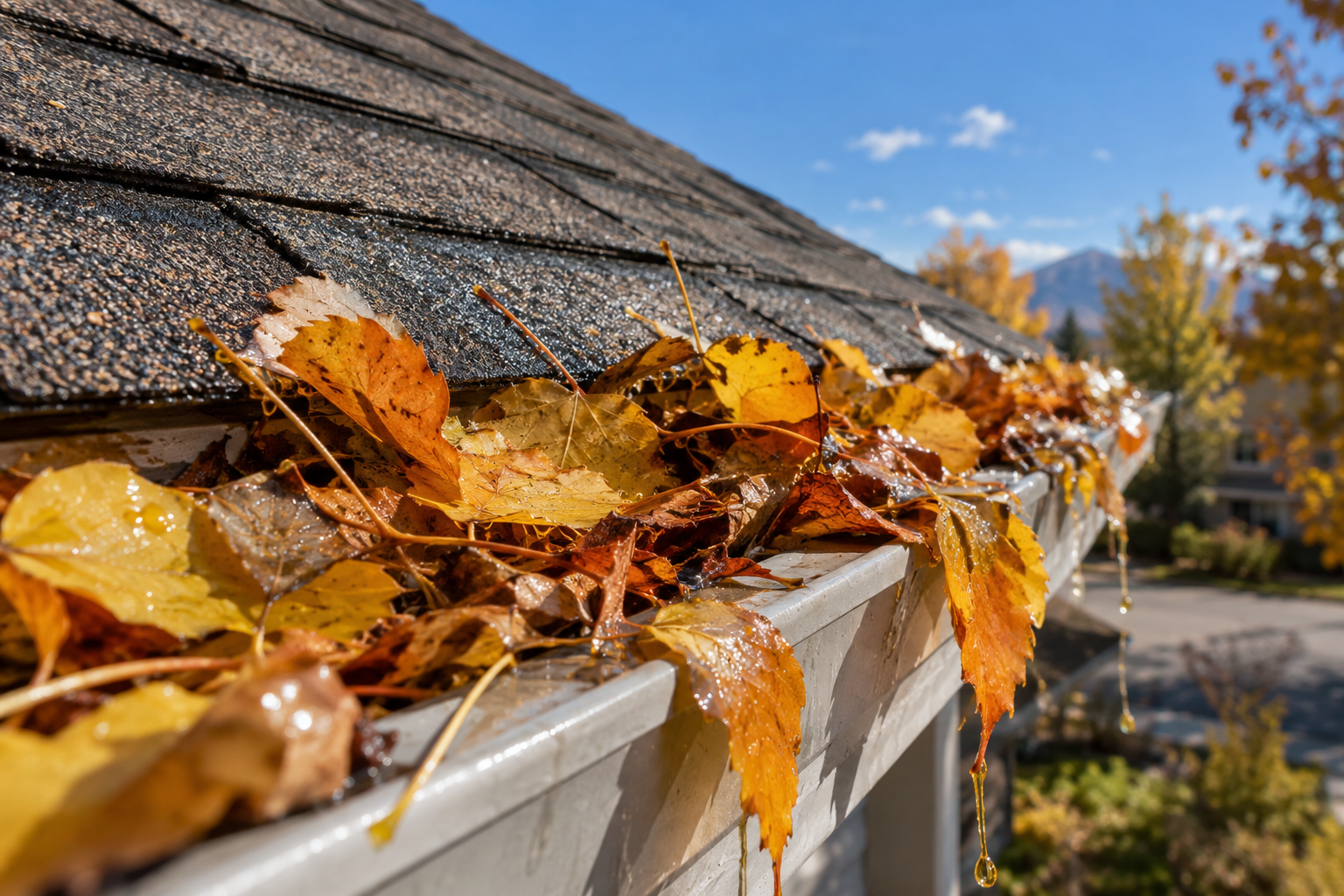
Third, clean gutters. Gutters don’t cause ice dams, but gutters packed with fall leaves freeze into a solid block that gives the dam a head start and a foundation. Clearing them before the first big snow removes the scaffolding.
Why Does Fall Matter So Much for Ice Dam Prevention?
Because none of the real fixes can happen in January. Insulation and air sealing are attic work you want done before it’s 10 degrees up there, ventilation corrections are roof work that needs dry shingles, and gutter cleaning is miserable and risky once ice shows up.
There’s a scheduling reality too: once the first big storm hits, every roofer and insulation contractor in the Denver metro books out for weeks. September and October are when you can get this work done on your timeline instead of the weather’s. Our fall roof maintenance checklist puts the whole punch list in one place.
Do Heat Cables Actually Work?
Honest answer: heat cables treat the symptom, not the cause. They melt drainage channels through the ice so trapped water has somewhere to go, and on a roof with a stubborn trouble spot, like a north-facing valley or a low-slope section over a porch, they can be a reasonable tool.
But if a house needs heat cables across the whole eave line, that’s a sign the attic underneath is losing heat it shouldn’t. Fix the insulation and ventilation first; add cables only where geometry, not heat loss, is the problem.
What Are the Warning Signs of an Ice Dam Problem?
This winter, keep an eye out for the early signals, most of which you can see from the driveway:
- Thick icicles hanging from the eaves or gutters, especially ones wider than your arm
- A visible ridge of ice building at the roof edge or behind the gutters
- Bare patches of roof high up while the eaves stay snow-covered, a sign of uneven melting
- Ice forming on exterior walls or siding below the roofline
- Water stains on ceilings or at the top of exterior walls after a cold snap
- Damp or matted insulation if you peek into the attic
Icicles on a string of below-zero days are normal Colorado. Icicles that keep growing for weeks, or any interior staining, mean water is going somewhere it shouldn’t.
What Should I Do if I Already Have an Ice Dam?
First, what not to do: don’t chip at it with a hatchet or shovel, and skip the rock salt. Chipping destroys shingles and voids warranties, and most de-icing salts corrode gutters and kill the landscaping below.
What does help: a roof rake with a long extension pole lets you pull snow off the lower few feet of roof from the ground, which starves the dam of meltwater. For a dam that’s already causing leaks, a professional with a low-pressure steamer can remove it without harming the roof. And once spring comes, treat the ice dam as the warning it was and get the attic looked at.
A Cold Roof Is a Happy Roof
Ice dams feel like a winter problem, but they’re really a fall decision. A tight, well-vented attic and clean gutters will do more for your roof this winter than anything you can buy in January.
If you’d like a second set of eyes before the snow flies, Watchdog Roofing and Restoration is locally owned and based in Brighton, serving Adams County and the surrounding Front Range communities. We’ll check your ventilation, eaves, and gutters in one visit and give you the honest version of what needs attention and what doesn’t.
Beat the first snow. Call Watchdog Roofing and Restoration at 720-235-8159 for a free, no-pressure roof inspection.