If you live along Colorado’s Front Range, you know the sound: that sudden drumroll on the roof that sends everyone to the window. Now the storm has passed, the ice in the driveway is melting, and you have a roofer coming out, or one has already been up there. What happens next matters, and knowing the right questions to ask your roofer after a hailstorm keeps you in the driver’s seat instead of just nodding along.
One quick note before we dig in: this guide assumes hail damage is already on the table. If you’re still comparing contractors and deciding who deserves your signature, start with our guide to the questions to ask a roofer before you sign. This post picks up where that one leaves off. It covers the damage itself, the insurance claim, the timeline, and the warning signs to watch on your own home in the weeks that follow.
How Bad Is the Hail Damage, and Can You Show Me?
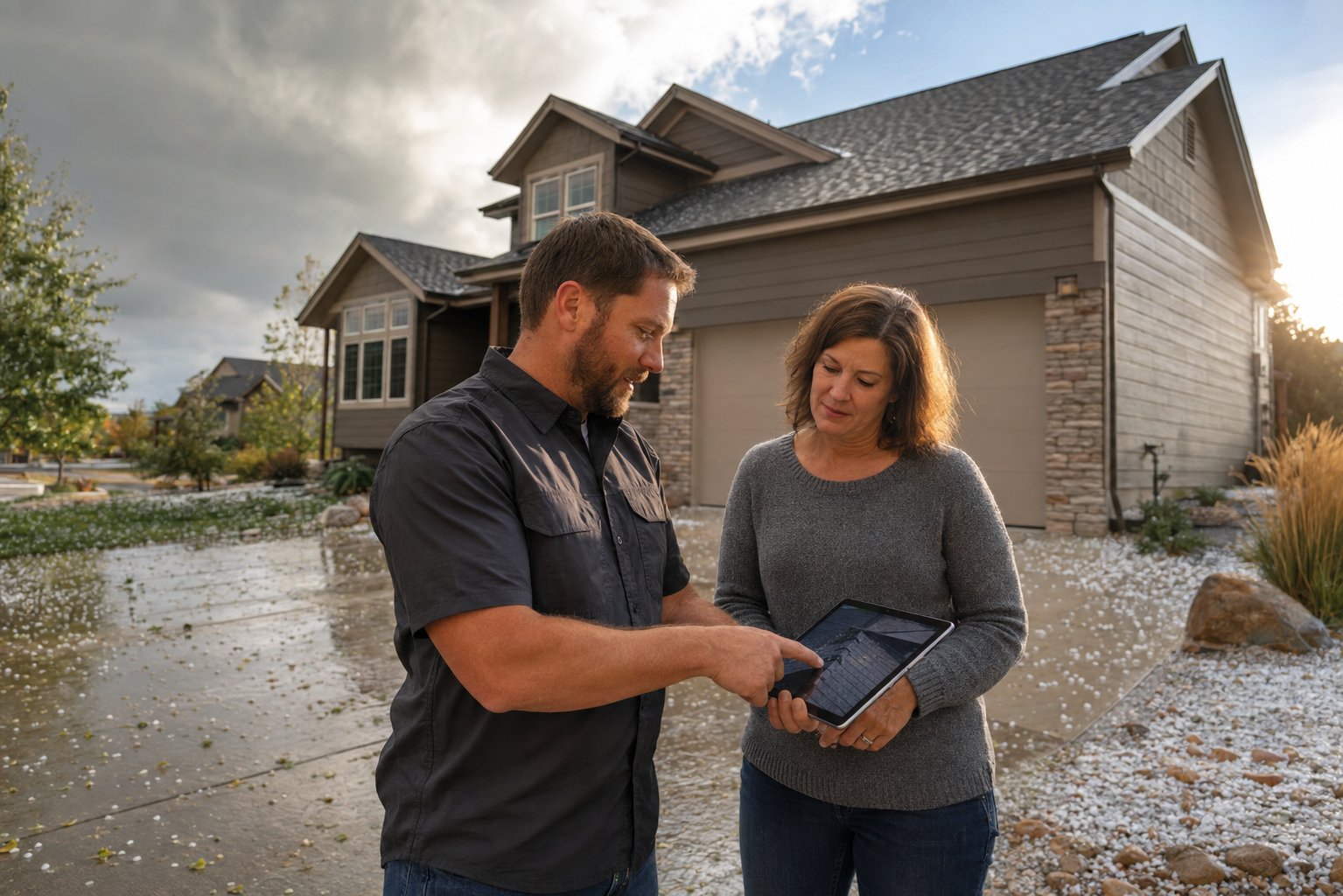
This is question one, and the answer should never come from the driveway. A trustworthy roofer gets up on the roof (or flies a drone), documents what’s there, and then sits down with you to go through photos of your actual roof.
Ask to see close-ups of bruised or fractured shingles, dented soft metals like vents and flashing, and any chalk-marked test squares. “Trust me, it’s rough up there” is not documentation. If a roofer can’t or won’t show you pictures, slow everything down.
Good photo documentation protects you twice. It confirms the damage is real, and it becomes the backbone of your insurance claim if you decide to file one.
Is This Hail Damage Cosmetic, or Does My Roof Actually Need Repair?
Not every ding is a crisis, and an honest roofer will tell you so. A dented downspout or a few dimples in a gutter guard may be purely cosmetic. Functional damage is a different animal: bruised shingle mats, cracks, and granule loss that exposes the underlying material all shorten your roof’s life and open the door to leaks.
Colorado weather is the wild card here. Our freeze-thaw cycles let moisture work into a small hail bruise, freeze overnight, expand, and pry the damage wider, over and over, all winter long. A spot that looks harmless in September can be leaking by March.
So ask your roofer to draw the line plainly: this is cosmetic, this is functional, and here’s why. A good one won’t hesitate to make that distinction.
Should I File an Insurance Claim, and How Does the Process Work?
A good roofer helps you make this decision rather than making it for you. If repairs would cost less than your deductible, filing a claim may not be worth it. If the damage is widespread, a claim is usually the right call, and your roofer should offer to meet your insurance adjuster on site to walk through everything they documented.
The process itself is simpler than it feels: you file the claim, your insurer sends out an adjuster, the adjuster and your roofer compare notes on the roof, and the insurance company issues a scope of work and payment, minus your deductible.
One firm warning. If any contractor offers to “waive,” “cover,” or “eat” your deductible, end the conversation. In Colorado that is insurance fraud, it is illegal for the contractor, and homeowners who go along with it can be held responsible too.
What’s Your Timeline, and Will You Put It in Writing?
After a major hailstorm, every reputable roofer in Adams County is busy, and the honest ones will admit it. What matters is that the plan lives on paper: scope of work, materials, an approximate start date, the payment schedule, and warranty terms, all in a written contract you can actually read.
Watch out for anyone pushing you to “sign tonight to lock in storm pricing.” That urgency serves the salesperson, not your shingles. Colorado law even gives you the right to cancel a roofing contract within 72 hours of signing, and a legitimate contractor will never mind you sleeping on it.
Are You Local, and Will You Be Here if Something Goes Wrong?
After every big Front Range hailstorm, out-of-state “storm chaser” crews roll into town, work fast, and disappear once the insurance checks clear. Their workmanship warranty might read beautifully, but a warranty is only worth something if the company still exists when you call the number.
So ask for a physical address, not a P.O. box or a truck with out-of-state plates. Watchdog Roofing and Restoration works out of a real office at 30 S. 7th Ave in Brighton, and our owner Ken Green and teammate Chris Simms were featured on FOX21 News warning Colorado homeowners about exactly these post-storm roofing scams. We’ve cleaned up too many messes left behind by crews that were long gone before the roof ever leaked.
A roofer who lives where you live has every reason to stand behind the work. Our reputation shops at the same grocery stores you do.
What Should I Keep an Eye On After the Storm?
Some hail damage doesn’t announce itself for weeks. The good news is that you can spot most warning signs from the ground and inside your house. Please stay off the roof itself; wet shingles and hidden damage make it genuinely risky, and climbing up is our job, not yours. Watch for:
- Water stains on ceilings or walls, especially after the next rain
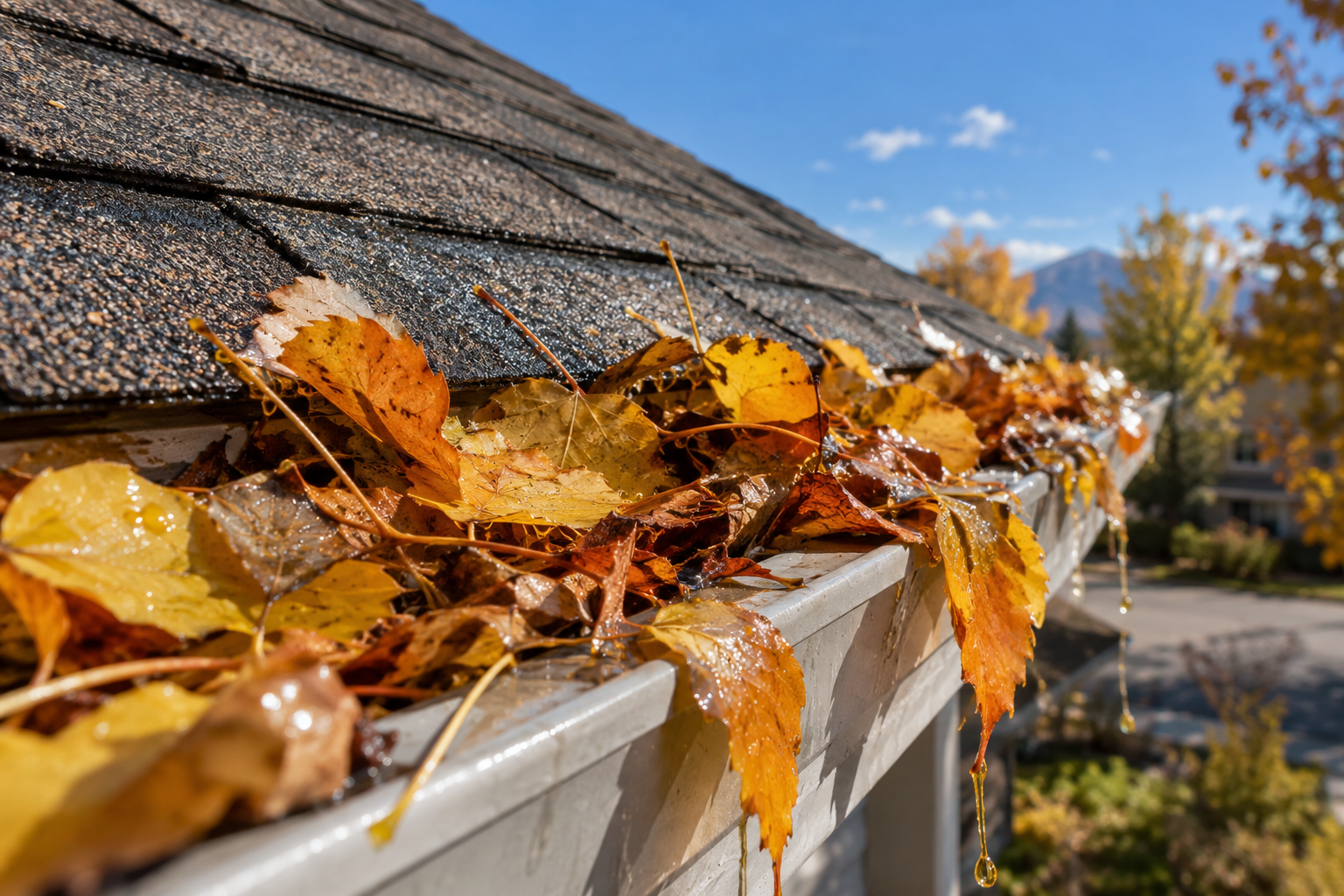
- Shingle granules collecting in gutters and downspouts, like coarse dark sand
- A musty smell or damp spots in the attic
- Dents in gutters, downspouts, flashing, roof vents, or your AC unit’s fins
- Lifted, cracked, or missing shingles visible from the yard
- Energy bills creeping up, which can signal compromised roofing or ventilation
If any of these show up, call your roofer back out promptly. And for a walkthrough of what to do in the first hours and days after a storm hits, keep our hail storm emergency guide bookmarked.
How Long Do I Have to Act After Hail Damage?
Longer than a pushy door-knocker implies, but shorter than you might like. Most homeowner policies set a window for filing storm claims, often around one year from the date of the storm, and some are shorter. Check your policy or ask your agent for your exact deadline, and write down the storm date now while it’s fresh.
The bigger clock isn’t the paperwork; it’s the roof. Every freeze-thaw cycle gives minor damage a chance to grow into a leak, and insurers can push back on claims when damage sat unaddressed for months. No need to panic, but do get an inspection sooner rather than later.
Still Have Questions to Ask Your Roofer After a Hailstorm?
Good. Keep asking them. A quality roofer welcomes every question on this list, because clear answers are how trust gets built, and on a project this size, trust is the whole ballgame. A contractor who gets squirmy under friendly questioning is telling you something important.
Watchdog Roofing and Restoration is locally owned and based right here in Brighton, serving homeowners across Adams County and the neighboring Front Range communities we serve. We inspect, we document, we explain, and we don’t pressure. That’s the whole playbook.
Hail hit your neighborhood? Call Watchdog Roofing and Restoration at 720-235-8159 for a free, no-pressure roof inspection.