
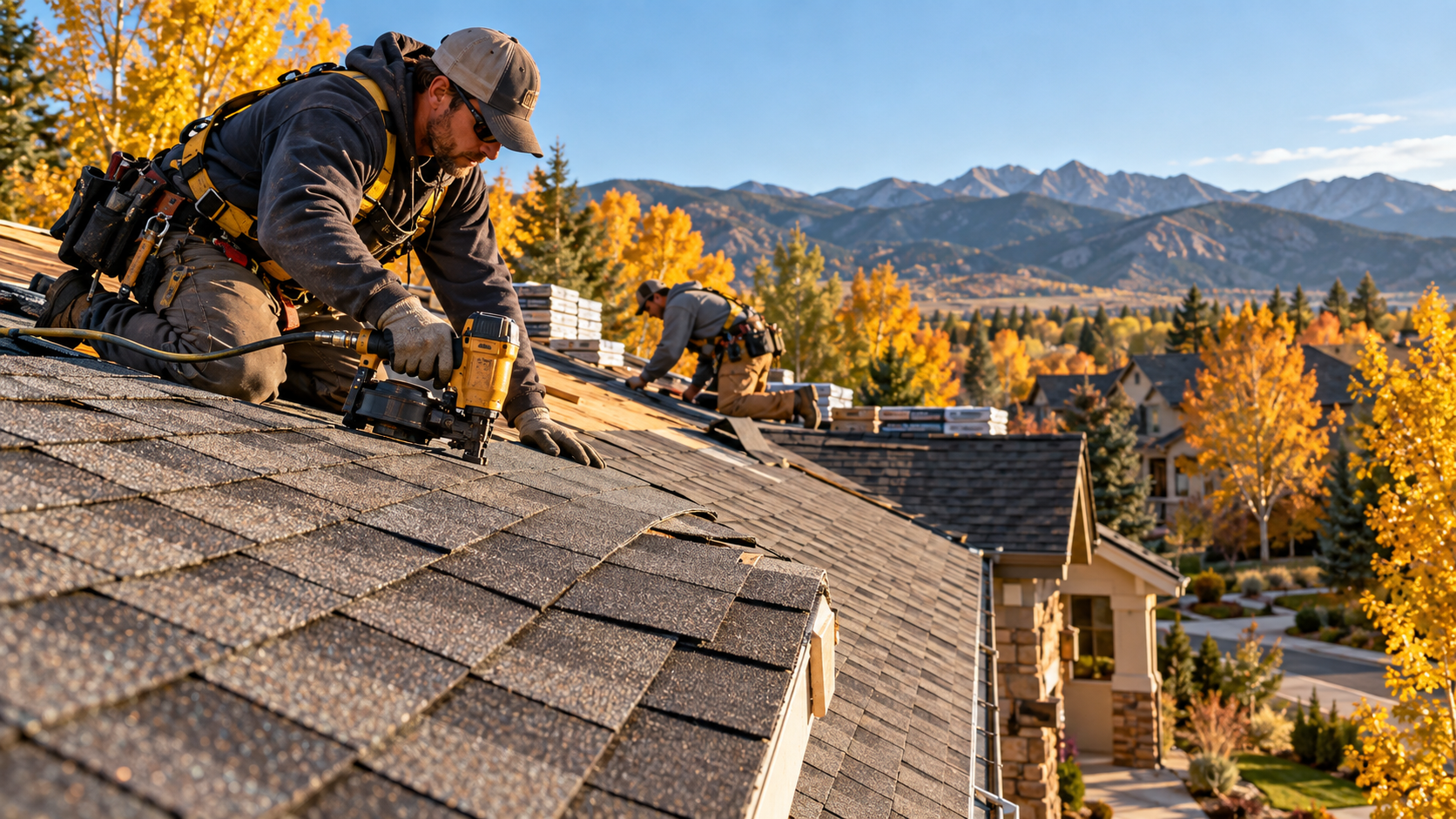
Every September, the same question starts coming up in driveways across Brighton and the Denver metro: should I replace my roof now, or wait until spring? It’s a fair question, and the honest answer is more interesting than a sales pitch. If you’re weighing the best time to replace a roof in Colorado, fall has real, physical advantages that have nothing to do with marketing, plus a couple of caveats worth knowing.
Here’s how autumn actually stacks up, from shingle chemistry to scheduling, and how to tell whether your roof can wait for spring at all.
Is Fall Really the Best Time to Replace a Roof in Colorado?
For most homes, yes, and it’s not especially close. September through early November combines the mild temperatures shingles need to seal properly, the calmest stretch of Colorado’s weather calendar, and enough runway to get the work finished before serious snow.
That said, “best” doesn’t mean “only.” Roofs get replaced successfully in Colorado year-round. Fall is simply when the conditions, the calendar, and the insurance cycle all line up in the homeowner’s favor.
Why Does Fall Weather Matter for a New Roof?
Asphalt shingles have a strip of thermal sealant on the back of each shingle. After installation, sun and warmth soften that strip so each shingle bonds to the one below it, and that bond is what gives the roof its wind resistance. Sealing works best when daytime temperatures sit roughly between the 40s and 80s, which describes most Front Range fall days almost perfectly.
Install in high summer heat and shingles get soft enough to scuff underfoot. Install in deep winter and the sealant may not activate until spring, which is why cold-weather jobs often require hand-sealing each shingle. Fall splits the difference: crews work faster, materials behave, and the roof seals down tight before winter wind tests it.
Fall is also past the worst of hail season. Colorado’s big hail window runs roughly May through August, so a roof installed in October isn’t likely to take a beating in its first weeks of life.
What About Scheduling and the Insurance Cycle?
There’s a rhythm to roofing along the Front Range. Summer hailstorms generate insurance claims, adjusters work through them in late summer, and approved claims turn into fall projects. If you have an approved claim from this year’s storms, fall is when that work naturally lands, and waiting until spring can bump into your policy’s deadline for completing repairs.
Fall calendars do fill fast, especially after an active hail year. The flip side: book early enough and you get your pick of dates, and a good contractor will walk you through what to expect during a roof replacement so the one or two days of work hold no surprises.
Is It Cheaper to Replace a Roof in the Fall?
We’ll give you the straight version: fall doesn’t come with an automatic discount, and be wary of anyone who says otherwise. Material prices don’t drop for the season, and reputable crews charge the same for good work in October as they do in June.
Where fall can save you money is indirect. Manufacturers sometimes adjust prices upward at the start of a new year, so locking in a project now means locking in this year’s material costs. Completing hail work within your claim window protects the insurance money you’re already owed. And avoiding a winter of freeze-thaw on a failing roof avoids the interior repairs that come with it. If cash flow is the concern, our guide on how to pay for a new roof in Colorado covers the realistic options.
How Late in the Year Can You Replace a Roof in Colorado?
Later than most people think. Along the Front Range, dry, mild stretches often run well into November, and experienced crews install roofs through winter when conditions allow. The trade-offs are real, though: shorter daylight, weather delays, and the hand-sealing mentioned earlier once temperatures stay below about 40 degrees.
So the practical answer is: if your roof needs replacing, don’t let October on the calendar talk you into waiting until April. But every week you wait narrows the window of ideal conditions, and after the first sustained cold, you’re managing around winter instead of ahead of it.
Which Roofs Shouldn’t Wait for Spring?
Some roofs can genuinely wait, and an honest inspection will say so. But get on a fall schedule now if any of these apply:
- Active leaks or ceiling stains, even small ones, since freeze-thaw makes them worse all winter
- Hail damage from this summer’s storms, especially with an approved or pending insurance claim
- Shingles that are curling, cracking, or shedding granules heavily into the gutters
- A roof at or past its expected lifespan, typically 15 to 20 years for standard asphalt shingles in Colorado’s climate
- Sagging decking, soft spots, or daylight visible in the attic
- Missing shingles or exposed underlayment heading into snow season
If several of those sound familiar, our post on the 5 signs it’s time to replace your roof goes deeper on each one.
Should I Upgrade Shingles While I’m At It?
A replacement is the one moment upgrades are nearly free to consider, since you’re already paying for labor and tear-off. In hail country, the upgrade worth a serious look is Class 4 impact-resistant shingles: they shrug off more hail, and many Colorado insurers offer premium discounts for them. Our Class 4 shingle guide covers the cost-benefit math for Front Range homes.
The Bottom Line on Fall Roof Replacement
Fall in Colorado gives you sealing temperatures, calm weather, room on the calendar before snow, and the natural endpoint of the insurance cycle. If your roof is on the fence, an inspection settles the question with evidence instead of guesswork, and if it can wait, we’ll tell you that too.
Watchdog Roofing and Restoration is locally owned and based in Brighton, serving Adams County and the surrounding Front Range communities. Ken, Chris, and the crew document every roof with photos, so you decide based on what’s actually up there.
Thinking about a new roof before winter? Call Watchdog Roofing and Restoration at 720-235-8159 for a free, no-pressure roof inspection.